Dermatology Courses After BAMS
Choosing among the right dermatology courses after BAMS can be difficult, especially when you want practical training and not only theory. Many BAMS graduates look for skill-based programs that help them move into dermatology, cosmetology, and clinic practice.
In this after BAMS course list, there are two main pathways to consider. First, short-term certificate programs for focused skill development. Second, structured fellowship courses after BAMS (certificate included) for broader clinical exposure.
Why Many Doctors Explore Dermatology Courses After BAMS
Many BAMS doctors want practical exposure in skin and hair practice. However, short practical exposure during graduation can create a gap between theory and day-to-day clinic work.
Because of this, these courses of dermatology & cosmetology are often explored for:
- ✓ Practical skill development
- ✓ Procedure exposure
- ✓ Clinical confidence
- ✓ Expanding clinic services
- ✓ Building a focused specialty path
In addition, dermatology combines consultation-based practice with procedure-based learning. That is one reason many doctors review both certificate courses after BAMS and fellowship courses after BAMS before choosing.
Certificate Courses After BAMS
If you want focused learning in a specific area, certificate courses after BAMS can be a practical starting point.
1. Certificate in Acne & Acne Scar Management
This course is suitable for doctors who want focused exposure to acne-related case understanding and acne scar management.
It may help learners understand:
- ✓ Acne case evaluation
- ✓ Patient selection
- ✓ Treatment planning concepts
- ✓ Practical procedure exposure
Suitable for:
- ✓ Fresh BAMS graduates
- ✓ Doctors interested in acne-focused practice
2. Certificate in Laser Procedures
Laser procedures are commonly discussed in modern aesthetic practice. Therefore, many doctors explore this course for introductory practical exposure.
Focus areas may include:
- ✓ Types of lasers and indications
- ✓ Basic procedure understanding
- ✓ Safety concepts
- ✓ Practical exposure to laser-based treatments
3. Hands on Certificate in Chemical Peeling
Chemical peeling is often considered by doctors entering cosmetology.
This course may help with:
- ✓ Understanding peel basics
- ✓ Patient evaluation
- ✓ Indications and precautions
- ✓ Practical exposure to peeling concepts
4. Certificate in PRP Management
PRP is another commonly explored skill-based course.
This course may support learning in:
- ✓ PRP basics
- ✓ Clinical understanding
- ✓ Procedure exposure
- ✓ Patient selection concepts
Suitable for doctors interested in adding regenerative procedure knowledge.
5. Certificate in Warts Management
This course focuses on practical understanding related to wart management.
It may suit doctors who want:
- ✓ Minor procedure exposure
- ✓ Focused treatment learning
- ✓ Skill development in procedural dermatology
6. Certificate in Electric Cautrization
This course may help doctors understand cautrization-based procedural concepts.
Focus may include:
- ✓ Procedure basics
- ✓ Safety considerations
- ✓ Practical exposure
Suitable for doctors adding minor procedures to practice.
Who Should Choose Certificate Courses?
These certificate courses after BAMS may be suitable for:
- ✓ Final-year students
- ✓ Fresh graduates
- ✓ Doctors wanting focused skill learning
- ✓ Clinic owners adding one procedure at a time
If you want topic-specific learning with short duration, certificate courses may be useful.
Fellowship Courses After BAMS
Doctors looking for deeper clinical learning often explore fellowship courses after BAMS.
1. CADC 3 Month Module
This module includes:
- ✓ 2 months clinical OPD training
- ✓ 1 month internship exposure
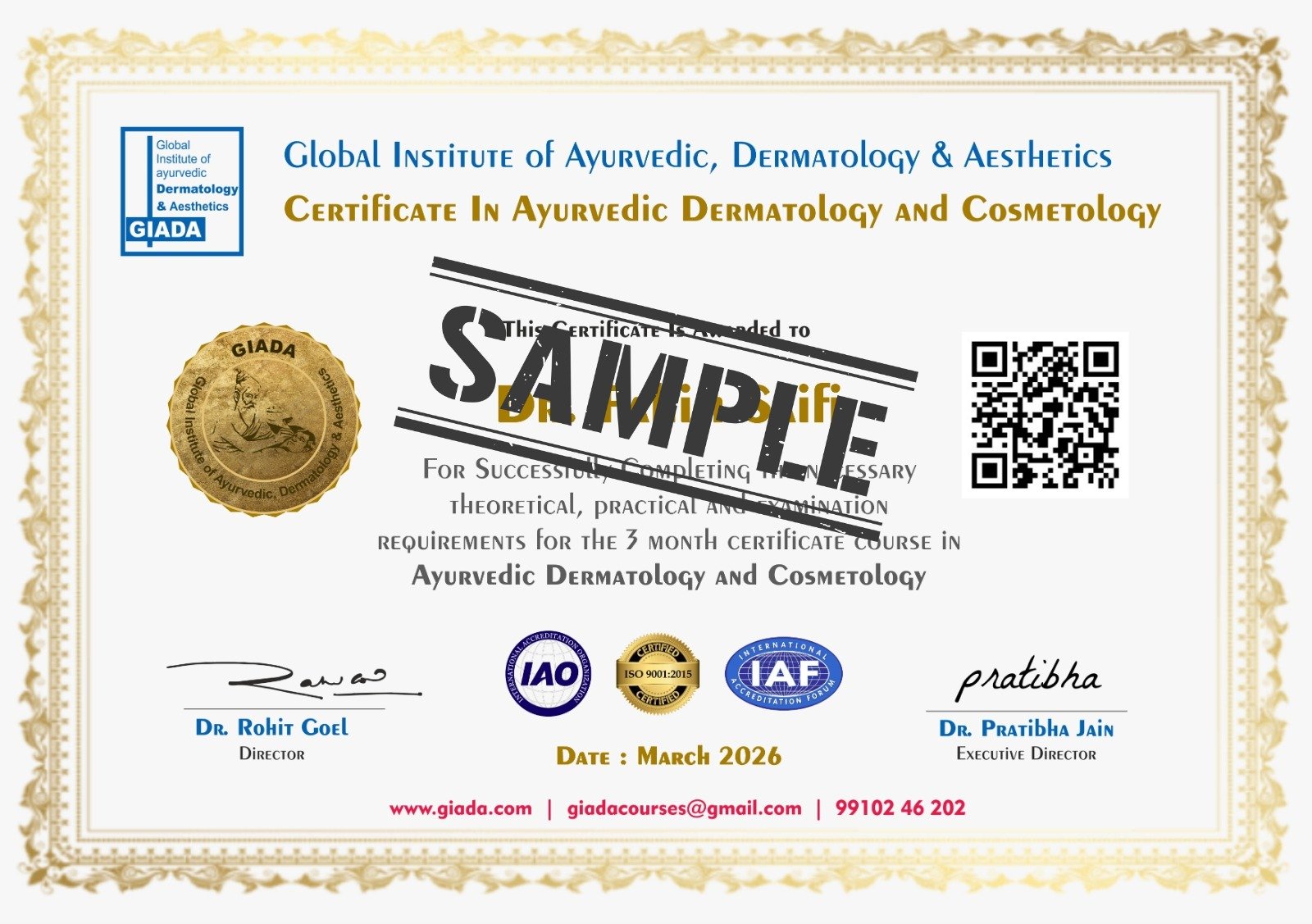
GIADA course information highlights live OPD exposure, patient handling, treatment planning, medicine understanding, and clinic operations.
Learning areas may include:
- ✓ Skin and hair case exposure
- ✓ Patient counselling
- ✓ Practical dermatology learning
- ✓ Basic procedure exposure
- ✓ Clinic operations understanding
Suitable for:
- ✓ Final-year students
- ✓ Fresh BAMS graduates
- ✓ Doctors wanting faster entry into dermatology
2. CADC 9 Month Module (6 Month Clinical Internship)
This module includes:
- ✓ 3 month course
- ✓ 6 month clinical internship
This offers longer exposure compared with shorter modules.
GIADA course information notes structured training followed by internship with patient exposure and clinic-based practice. (giada.in)
It may suit doctors who want:
- ✓ Extended hands-on learning
- ✓ More patient exposure
- ✓ Stronger practical confidence
Suitable for:
- ✓ Practicing doctors
- ✓ Clinic owners
- ✓ Doctors planning focused skin practice
3. CADC Online Dermatology Course
Some learners need flexibility. For them, Online CADC Course may be considered.
This may suit:
- ✓ Working doctors
- ✓ Learners preferring flexible schedules
- ✓ Doctors who want theoretical learning support
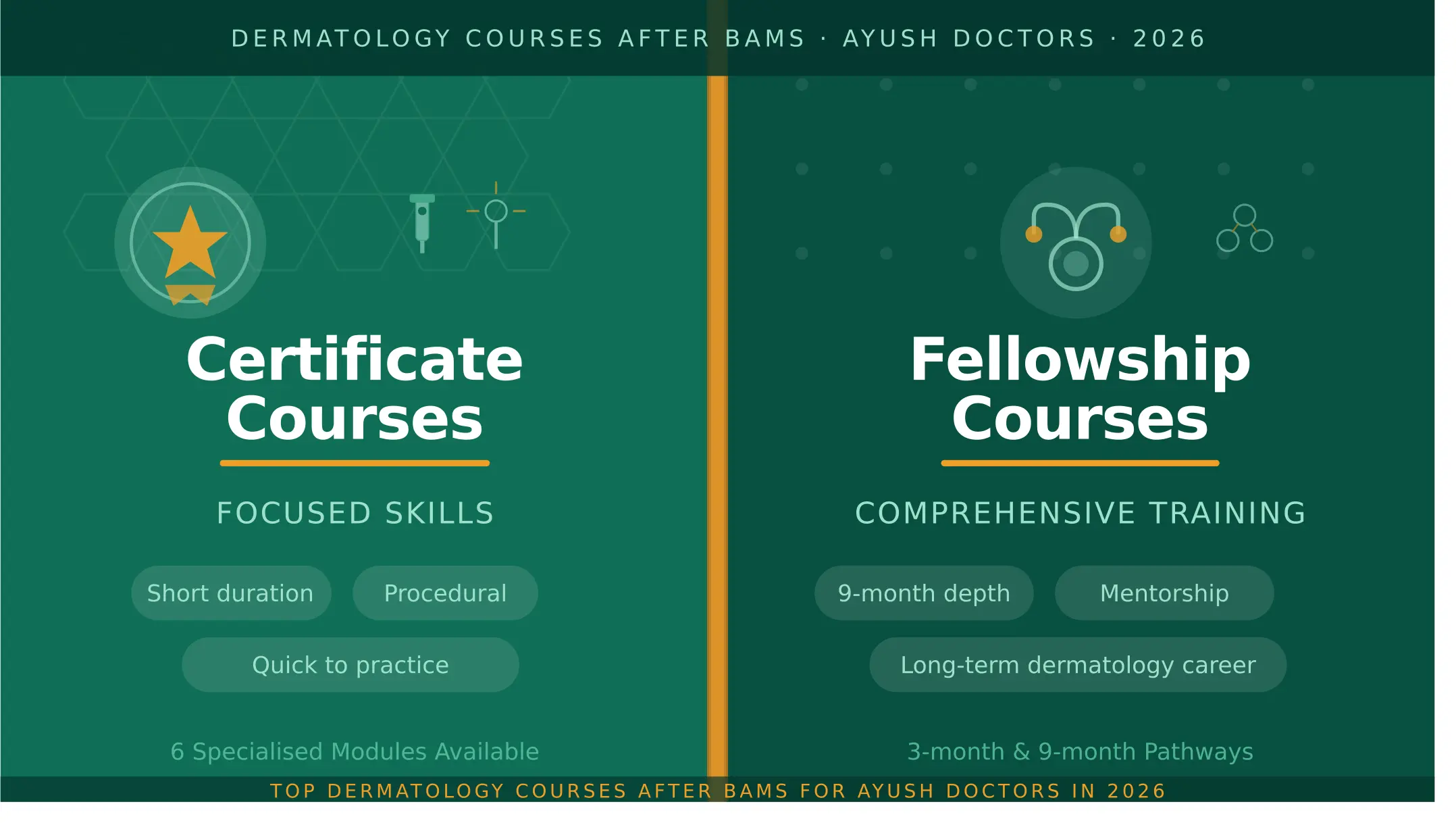
Certificate Courses vs Fellowship Courses After BAMS
Certificate Courses After BAMS
Best for:
- ✓ Focused skill development
- ✓ Short-duration learning
- ✓ Topic-specific procedure exposure
Fellowship Courses After BAMS
Best for:
- ✓ Structured training
- ✓ Broader clinical exposure
- ✓ Practical learning over longer duration
How to Choose the Right Course
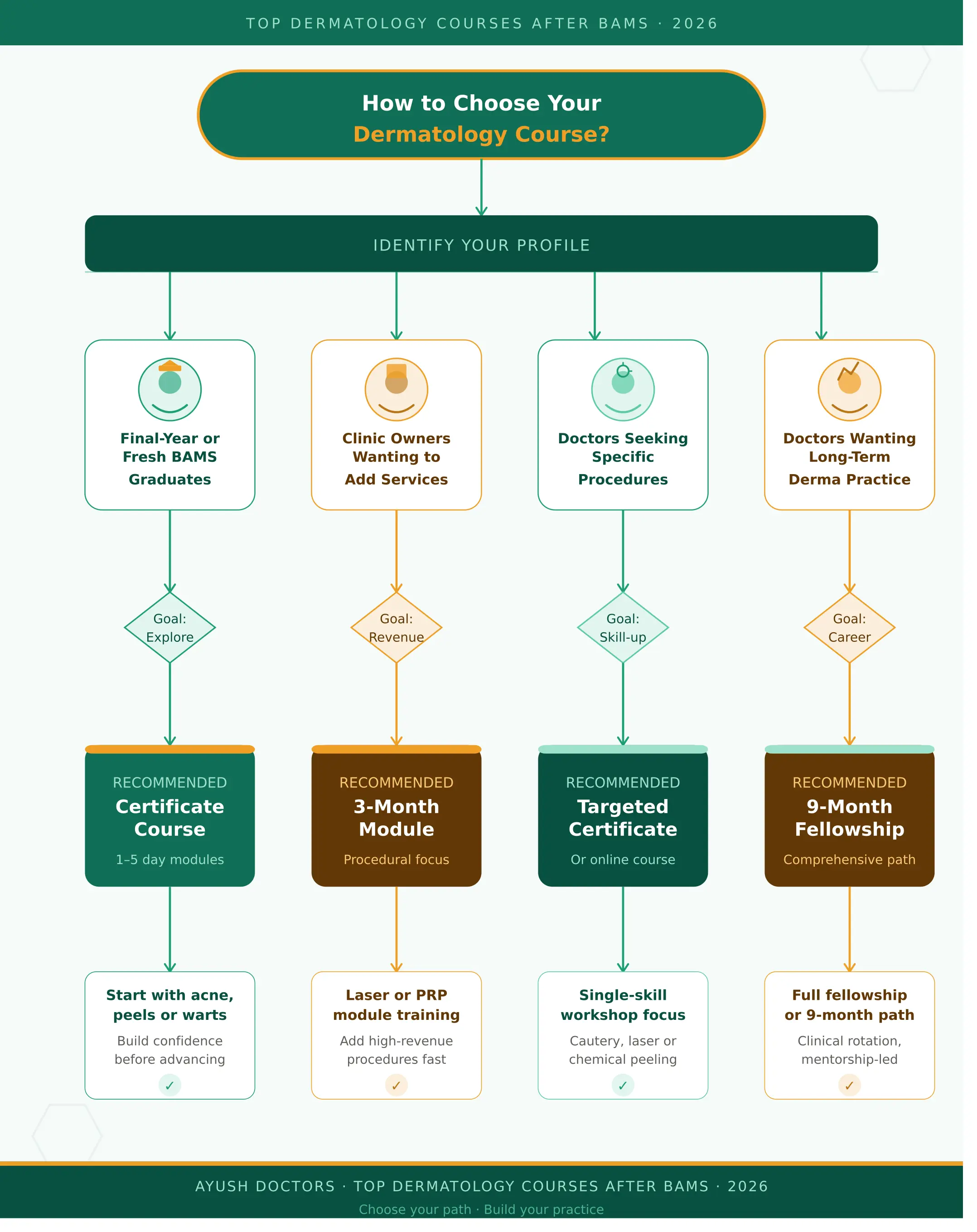
Choose based on your current stage.
If you are a final-year student
A short certificate program or CADC 3 month module may be a practical start.
If you already run a clinic
The CADC 9 month module may be more suitable because of extended internship exposure.
If you want focused procedural skills
Short certificate courses after BAMS may fit better.
If you want broader clinical training
Structured fellowship courses after BAMS may be a better choice.
Which is the Best Dermatology Course After BAMS in 2026?
There is no single answer for everyone.
The best course depends on:
- ✓ Your learning goal
- ✓ Your current clinical stage
- ✓ Whether you want short-term skills or structured training
That is why many doctors compare both certificate courses after BAMS and fellowship courses after BAMS before deciding.
Conclusion
There are multiple options in this after BAMS course list for doctors interested in skin practice.
Short-term certificate courses after BAMS may help build focused procedural skills.
Structured fellowship courses after BAMS may support deeper clinical exposure.
If you are comparing dermatology courses after BAMS in 2026, choose based on your goals, practical needs, and the kind of training exposure you want.