Introduction
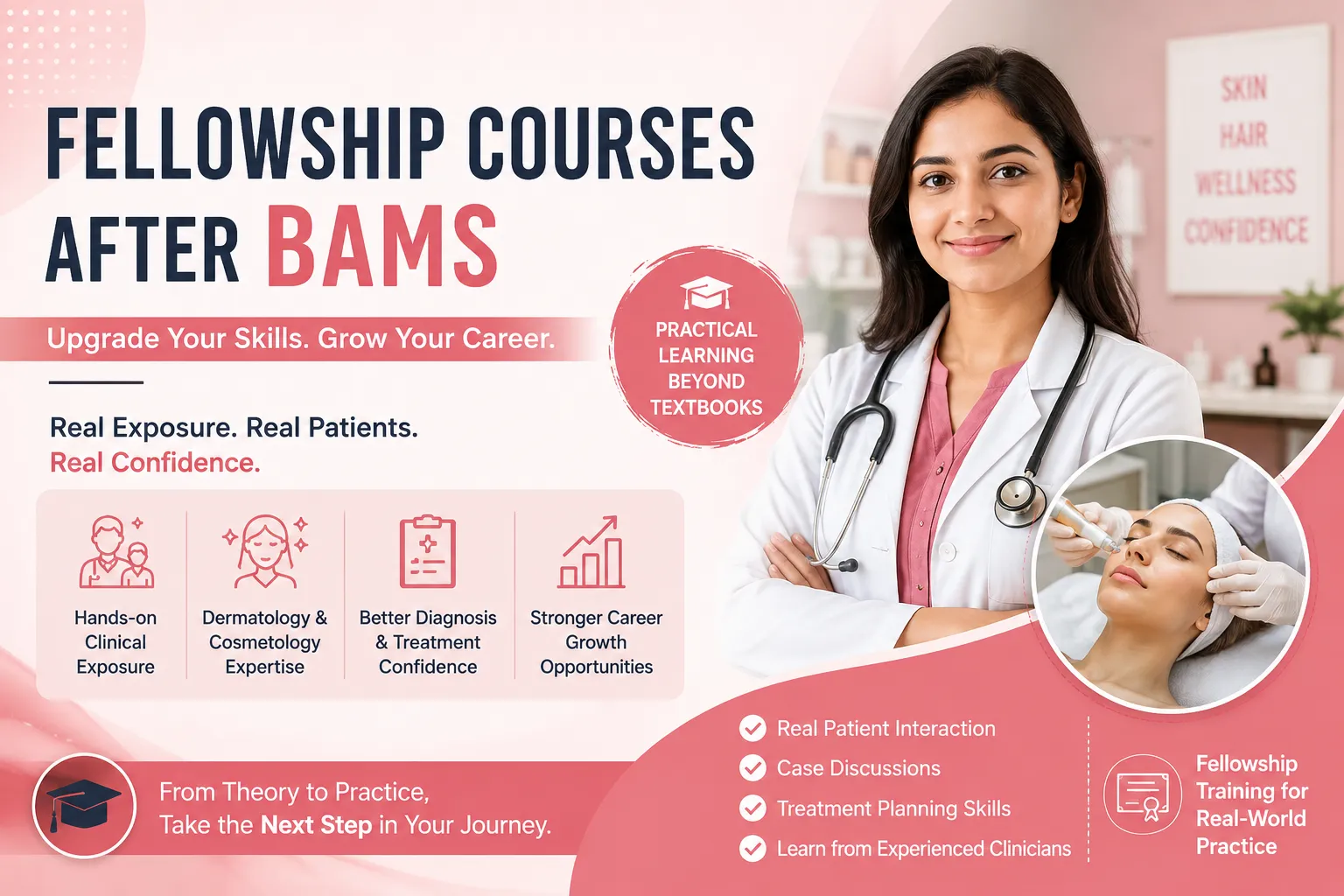
For many BAMS doctors, the real learning starts after graduation.
College gives you the foundation. You study subjects, appear for exams, and understand the theory behind diseases and treatments. However, once you start seeing patients, you realize that practice is very different from textbooks.
Many young doctors face the same situation. They understand the concepts but feel unsure while handling real cases. Questions like "Am I making the right diagnosis?" or "How would a more experienced doctor approach this patient?" are common in the early stages of practice.
This is one reason why fellowship courses after BAMS have become popular in recent years. Doctors are not simply looking for another certificate to add to their profile. Most are looking for practical exposure, clinical confidence, and a clearer direction for their career.
Whether someone wants to build expertise in dermatology, cosmetology, or another specialty, fellowship training is often seen as a bridge between academic learning and day-to-day clinical practice.
What Makes Doctors Consider Fellowship Training After BAMS?
Not every BAMS doctor wants to continue only with general practice.
After spending some time in a clinic, many doctors start identifying areas that genuinely interest them. Some enjoy managing chronic diseases. Others develop an interest in skin, hair, cosmetology, or lifestyle-related conditions.
At the same time, patients today expect more focused care. They often look for doctors who have deeper understanding of a particular field rather than someone offering only general consultation.
Because of this, many doctors start exploring fellowship courses after BAMS.
The goal is usually practical rather than academic.
They want:
- ➜ Better clinical confidence
- ➜ More patient exposure
- ➜ Stronger decision-making skills
- ➜ Understanding of specialty practice
- ➜ Experience beyond classroom learning
In simple words, fellowship training helps doctors feel more comfortable in real clinical situations.
Why Many Doctors Struggle After Graduation
One thing most doctors agree on is that confidence comes from seeing patients, not from reading notes repeatedly.
A textbook can teach you about acne, pigmentation, or eczema. However, real patients rarely present exactly like textbook examples.
One patient may have multiple concerns. Another may have already tried different treatments. Some may not follow instructions properly. Others may expect quick results.
Handling these situations requires experience.
This is where practical training becomes valuable.
When doctors regularly observe consultations, discuss cases, and follow patients over time, they begin to understand how clinical decisions are actually made.
That understanding is difficult to gain through theory alone.
What Makes a Fellowship Course Useful?
Not every fellowship course provides the same learning experience.
Before spending time and money on any fellowship, it is worth thinking about what you actually want to gain from it.
Will this training help you handle patients with greater confidence when you return to practice?
A useful fellowship program usually includes:
- ➜ Clinical observation
- ➜ Real patient interaction
- ➜ Case discussions
- ➜ Treatment planning concepts
- ➜ Exposure to day-to-day clinic workflow
On the other hand, programs that focus only on lectures may improve knowledge but may not significantly improve clinical confidence.
This is why practical exposure often becomes the deciding factor while choosing among different courses after BAMS.
Why So Many BAMS Doctors Eventually Look Towards Dermatology
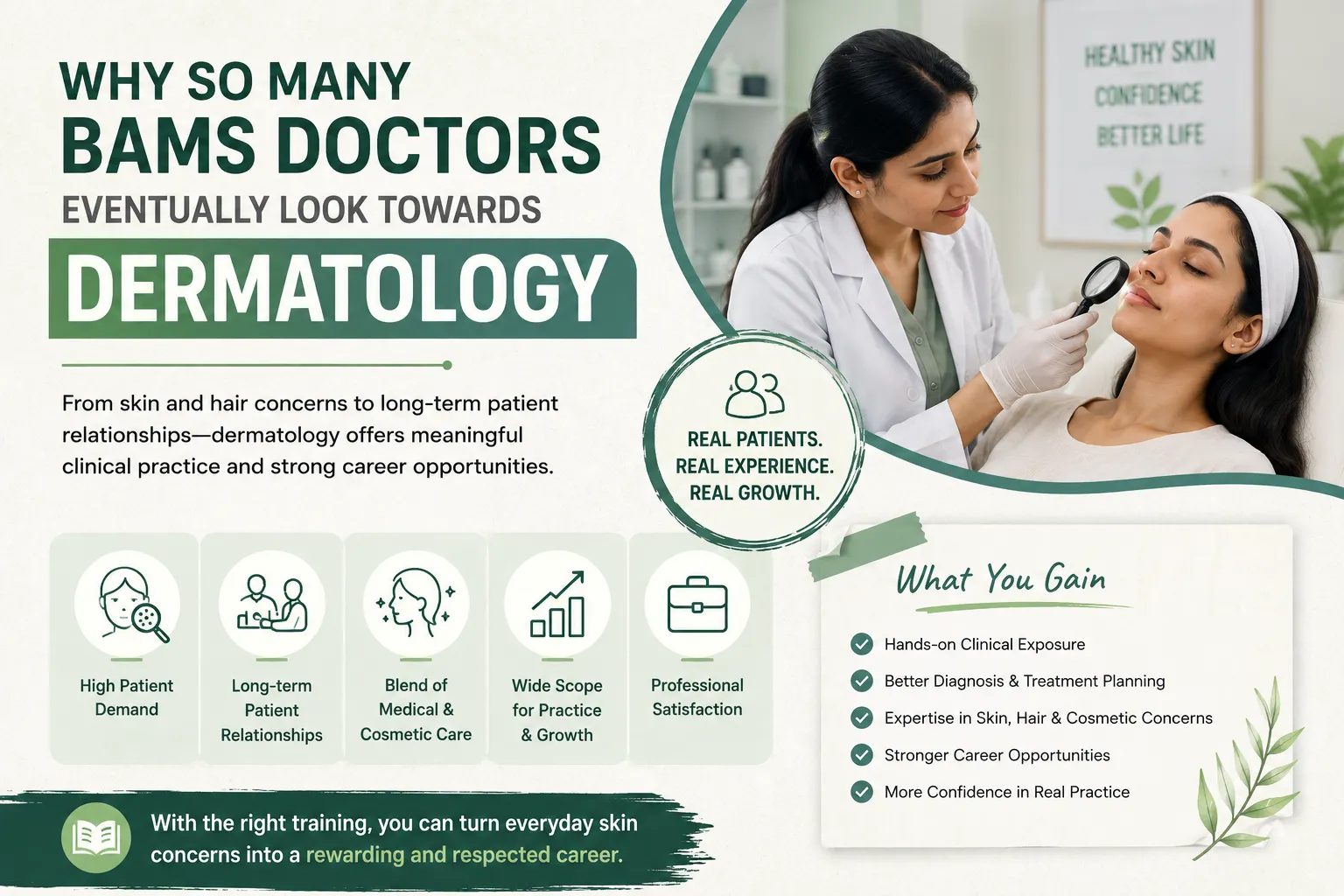
Among various specialization options, dermatology continues to attract significant interest from AYUSH doctors.
The reason is easy to understand.
Skin and hair concerns are among the most common complaints seen in practice. Acne, pigmentation, fungal infections, hair fall, dandruff, and chronic skin disorders affect people of all age groups.
Conditions such as acne, pigmentation, and hair fall usually require ongoing care. As patients continue their treatment, doctors naturally become a regular part of their healthcare journey.
Another reason for growing interest is the combination of consultation-based and procedure-based learning.
A doctor may spend part of the day managing skin conditions and another part understanding cosmetic procedures or treatment approaches.
Because of this balance, many doctors start exploring dermatology courses after BAMS as part of their career planning.
Understanding CADC Course as a Fellowship Option
Among the various ayurvedic dermatology courses available today, the CADC course is one option that many doctors come across while researching dermatology training.
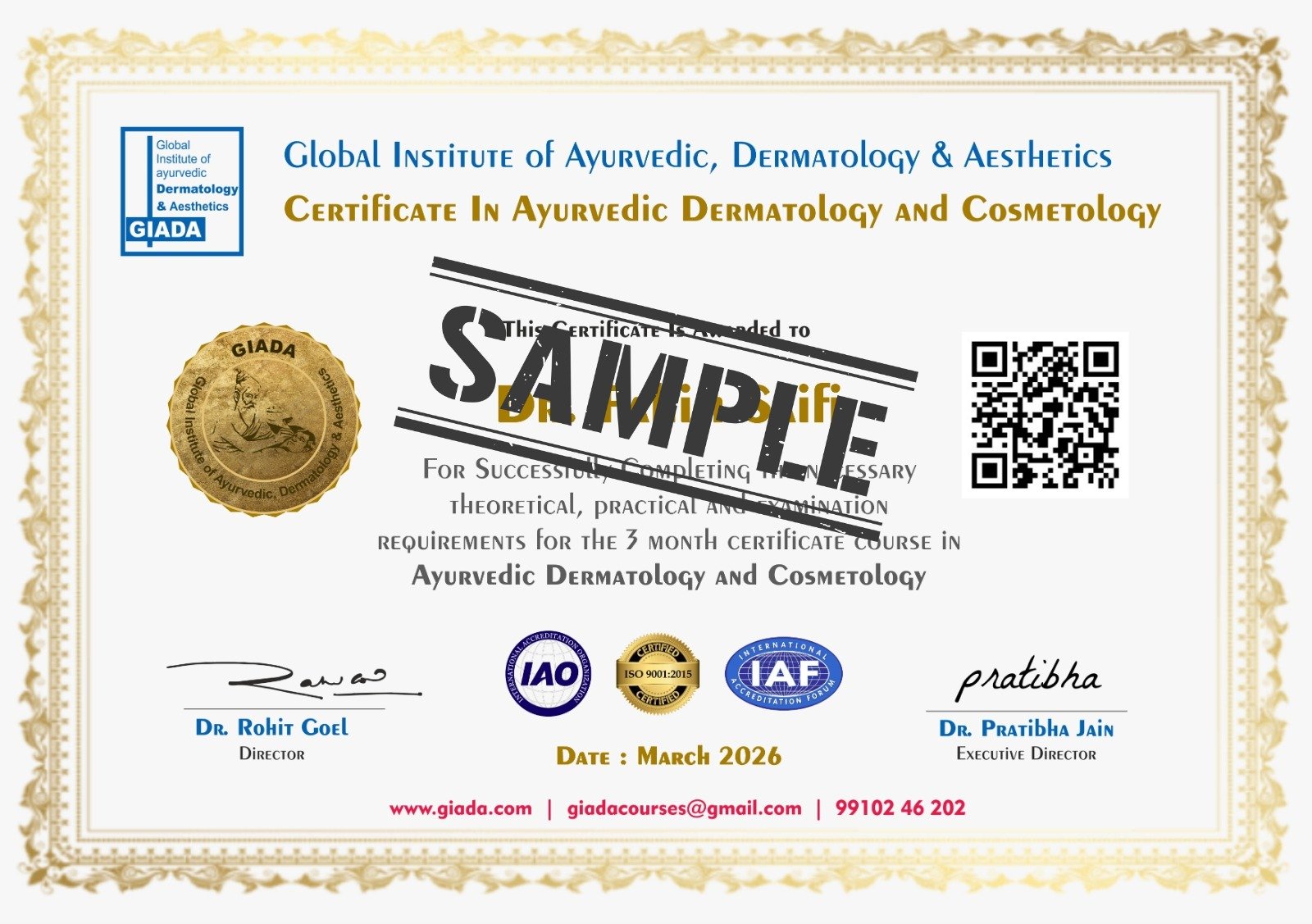
CADC stands for Certificate in Ayurvedic Dermatology and Cosmetology.
The course is designed around practical dermatology learning and clinical exposure.
Instead of focusing only on theoretical concepts, the training attempts to bring doctors closer to actual patient care and clinic workflow.
CADC 3-Month Module
The 3-month module focuses on structured clinical learning.
Doctors may get exposure to:
- ➜ OPD case observation
- ➜ Patient history taking
- ➜ Clinical assessment
- ➜ Understanding treatment planning
- ➜ Common dermatology conditions
- ➜ Laser Procedures (Inc. Laser Hair Removal)
The objective is not to create instant expertise but to help doctors become comfortable with real dermatology cases.
CADC 9-Month Module
The 9-month module includes:
- ➜ 3 months of training
- ➜ 6 months of clinical internship
One of the biggest advantages of a longer training period is the chance to follow patient journeys more closely rather than seeing isolated cases.
Doctors get additional opportunities to observe patient progress, understand follow-ups, and develop stronger clinical confidence through repeated exposure.
CADC Online Dermatology Course
Not every doctor can attend regular offline training.
Some are already running clinics. Others may have location or time constraints.
For such doctors, an online dermatology course can provide flexibility.
It helps in understanding concepts and building theoretical clarity. However, practical exposure still remains important for developing clinical confidence.
What Doctors May Learn
Depending on the training format, doctors may gain understanding in:
- ➜ OPD case handling
- ➜ Patient communication
- ➜ Acne-related conditions
- ➜ Pigmentation management concepts
- ➜ Hair disorder assessment
- ➜ Clinical observation skills
- ➜ Treatment planning approaches
- ➜ Understanding clinic workflow
The value of such learning usually comes from repeated exposure rather than a single workshop or lecture.
Certificate Courses vs Fellowship Courses After BAMS
Many doctors get confused between certificate programs and fellowship training.
Although both can contribute to professional growth, they offer very different learning experiences.
Certificate Courses After BAMS
Certificate programs are generally useful when a doctor wants to learn about a specific topic.
For example:
- ➜ Acne management
- ➜ Chemical peeling
- ➜ PRP concepts
- ➜ Laser basics
These courses are usually shorter and easier to complete.
However, because of limited duration, clinical exposure may also be limited.
Fellowship Courses After BAMS
Fellowship programs are broader.
They focus less on a single procedure and more on understanding how clinical practice works.
Doctors usually spend more time observing patients, discussing cases, and learning treatment planning.
Because of this, fellowship training often provides better continuity and deeper understanding.
How to Choose the Right Fellowship Course
There is no single fellowship course that suits everyone.
The right choice depends on individual goals.
Before making a decision, consider:
- ➜ What specialty genuinely interests you?
- ➜ Does the course include practical exposure?
- ➜ Is there opportunity for patient interaction?
- ➜ Do you prefer online or offline learning?
- ➜ Can you commit enough time to complete the training properly?
Sometimes doctors choose a course based on popularity. A better approach is choosing based on learning needs.
A course that matches your career goals will always be more useful than one chosen simply because others are doing it.
Career Opportunities After Fellowship Training
Fellowship training does not automatically transform a career overnight.
However, it can provide a stronger foundation.
Depending on experience and interests, doctors may choose to:
- ➜ Build independent practice
- ➜ Add specialty-focused services to an existing clinic
- ➜ Work in a dermatology setup
- ➜ Explore cosmetology-related services
- ➜ Continue developing clinical expertise
The most important benefit is often confidence.
When doctors understand cases better and communicate more effectively with patients, professional growth tends to happen naturally over time.
Conclusion
Many BAMS doctors reach a stage where they want more than theoretical knowledge. They want practical understanding, patient exposure, and confidence in handling real cases.
That is where fellowship courses after BAMS become relevant.
While certificate courses after BAMS can be useful for learning specific topics, fellowship programs often provide broader clinical exposure and continuity in learning.
For doctors interested in dermatology, structured programs such as the CADC course, including its 3-month, 9-month, and online modules, represent one pathway to gain practical exposure and understand how dermatology practice works in the real world.
At the end of the day, no course can replace experience. However, the right fellowship can make the journey from theory to practice much smoother.
```