Introduction
A BAMS or BHMS graduate entering practice today faces a different clinical environment than their teachers did. Patients arrive with more specific requests. They've researched their conditions online. They're asking about chemical peels, PRP, laser treatments, and acne scar management — not just traditional remedies. And if you can't have that conversation confidently, they'll find someone who can.
This isn't pressure to abandon your Ayurvedic foundation. It's an argument for building on it. AYUSH doctors already have something valuable: a grounding in skin as a reflection of systemic health, an understanding of the body that goes deeper than surface-level treatment. What cosmetology training adds is the procedural vocabulary and clinical techniques to translate that foundation into the kind of outcomes modern patients are looking for.
This article breaks down the main cosmetology learning pathways available for AYUSH doctors — what each covers, who each is designed for, and how to think about which one is right for your specific situation.
Why AYUSH Doctors Are Exploring Cosmetology
The growth of interest in cosmetology among BAMS and BHMS doctors isn't accidental. A few practical realities are driving it.
Skin and hair complaints are extraordinarily common. Walk into any general practice OPD and you'll find acne, pigmentation, hair fall, and chronic eczema on your patient list almost every day. A doctor who can address these conditions — both medically and aesthetically — is genuinely more useful to those patients than one who can only manage the clinical side.
There's also the matter of career continuity. Cosmetology is a skill-based field where patient outcomes are usually visible and relatively measurable. Patients can see whether their acne scars have improved. They know whether their hair is growing back. That kind of clarity is different from managing chronic internal conditions, and many doctors find it professionally rewarding in a distinct way.
For doctors building or expanding a practice, a visible cosmetic specialty also draws patients differently from general medicine. It tends to attract a patient population that is engaged, committed to follow-through, and often willing to invest in their care.
What Does a Cosmetology Career Involve?
Clinical cosmetology for AYUSH doctors centres on skin health, hair health, and aesthetic medicine — within the scope permitted by an AYUSH licence.
In practical terms, this means managing conditions like acne and post-acne scarring, various forms of pigmentation (melasma, post-inflammatory hyperpigmentation, tanning), hair fall including androgenetic alopecia, scalp disorders, benign skin lesions, and early signs of skin ageing. It involves offering treatments using modalities like chemical peels, microneedling, PRP, laser-based procedures, and various facial treatment protocols.
What separates a doctor practicing cosmetology well from one who is just attempting procedures is clinical thinking. The assessment comes before the treatment. Understanding why you're recommending a particular protocol — and what the realistic outcome looks like for this specific patient with this specific skin type — is what builds a genuine cosmetology practice rather than a procedure-chasing one.
Skills Required to Build Competence in Cosmetology
Cosmetology requires a specific set of skills that overlap with, but are distinct from, general clinical practice:
- ➤ Skin assessment: Systematically evaluating skin type using frameworks like Fitzpatrick typing, identifying the condition being treated, and documenting findings with clinical photography before and after treatment.
- ➤ Procedure knowledge: Understanding the science behind each treatment modality — how laser energy interacts with tissue, how a chemical peel induces controlled exfoliation, how PRP stimulates regenerative activity — not just the procedural steps.
- ➤ Treatment sequencing and combination planning: Knowing which treatments work well together, in what order, and with what intervals between sessions.
- ➤ Contraindication awareness: Identifying when a patient should not undergo a particular treatment — active infection, certain medications, pregnancy, known sensitivities — before proceeding.
- ➤ Complication recognition and management: Knowing what a post-peel burn looks like in its early stages, how to manage post-laser hyperpigmentation, and when a complication needs referral beyond your management capacity.
- ➤ Consent and documentation: Maintaining the paperwork that protects both the patient and the practitioner — consultation records, procedure-specific consent forms, follow-up notes.
These skills take time and structured exposure to develop. They're not acquired through a single weekend seminar.
Clinical Cosmetology Course: A Structured Learning Pathway
The Clinical Cosmetology Course is a 30-day offline, hands-on training programme open to BAMS, BHMS, BUMS, and BSMS doctors, including final-year students and interns. It is conducted at Noida, with training in Hindi and English medical terminology.
The course is built across ten modules that take a doctor from foundational skin science through to practice management. This sequencing is intentional — you don't start with PRP protocols before understanding how skin ages and how patients should be assessed. The first module covers skin anatomy and physiology, the ageing process, Fitzpatrick skin typing, skin analysis, clinical photography, and the full consultation and treatment planning framework. Everything that follows builds on this.
Procedure training spans chemical peels across multiple formulations — glycolic, salicylic, lactic, mandelic — with condition-specific protocols for acne, pigmentation, and anti-ageing. Facial procedures including hydrafacial, carbon facial, and oxygen facial are covered alongside microneedling and dermaroller techniques for scar management, open pores, and skin rejuvenation.
PRP and GFC training covers both hair and facial applications — hair fall assessment, androgenetic alopecia protocols, vampire facial technique, PRP for acne scars, dark circles, and skin rejuvenation. A dedicated trichology module covers hair anatomy, trichoscopy basics, scalp disorders, and hair treatment planning.
The laser module covers the fundamental physics — laser-tissue interaction, selective photothermolysis, chromophores, safety — and then clinical applications including laser hair reduction, pigmentation management, melasma, tanning, and photo rejuvenation, across diode laser, Q-switched Nd:YAG, and IPL platforms.
Importantly, a full module is devoted to complication management. Managing chemical peel burns, post-laser complications, allergic reactions, infection after cosmetic procedures, and knowing when to refer — these are treated as essential knowledge rather than edge cases.
The final module covers clinic setup and practice development — equipment selection, pricing, documentation templates, consent forms, and patient retention basics. For any doctor thinking about building a cosmetology-focused practice, this has direct practical value.
Advanced injectable procedures are included in the curriculum for academic awareness, patient counseling, and referral understanding. The course is clear that participants should practice in accordance with applicable laws and professional council guidelines — which is an important and realistic position.
Short-Term Certificate Courses in Cosmetology
For doctors who want focused learning in specific procedure areas, one-day certificate courses are available covering individual treatment modalities:
- ➤ PRP Management — PRP science, preparation, centrifuge handling, and clinical protocols for hair and skin
- ➤ Laser Procedures — laser physics, tissue interaction, and key clinical applications
- ➤ Chemical Peeling — peel types, selection, protocols, and complication awareness
- ➤ Electric Cauterization — electrocautery principles and minor lesion management
- ➤ Warts Management — clinical assessment and treatment of common warts
- ➤ Acne & Acne Scar Management — acne grading, scar classification, and treatment planning
These courses are focused by design. They work well as additions to existing clinical knowledge rather than as standalone foundations. A doctor who already has a working understanding of skin assessment and clinical cosmetology basics will get considerably more from a one-day chemical peeling course than one who is starting from scratch. Sequence them accordingly.
CADC Course and Its Cosmetology Components
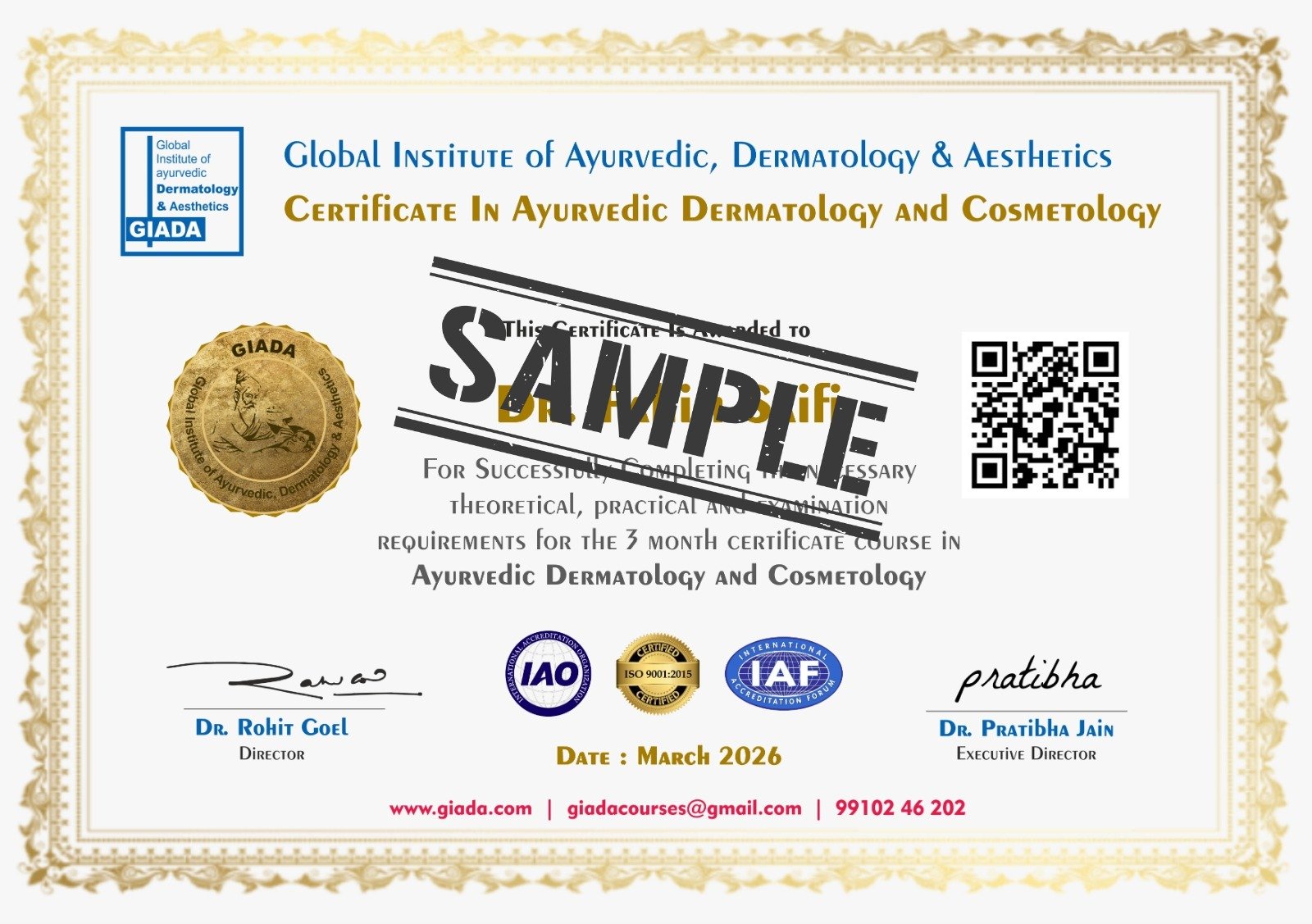
The CADC — Certificate in Ayurvedic Dermatology and Cosmetology is built differently from a pure cosmetology programme. It integrates cosmetology learning within a broader framework of Ayurvedic dermatology — skin diseases, hair and scalp disorders, and cosmetic concerns are all addressed together.
For AYUSH doctors whose daily patient load spans both clinical skin conditions and cosmetic concerns, this integration reflects how practice actually works. Patients with psoriasis also have cosmetic concerns. Patients seeking pigmentation treatment may also have underlying dermatological conditions. A training programme that treats these as separate silos doesn't serve that clinical reality as well as one that integrates them.
CADC 3-Month Module
The 3-month module is the entry-level CADC option. It covers both Ayurvedic dermatology and cosmetology within a structured framework, making it suitable for fresh graduates who want an organised introduction to the combined field without committing to extended training upfront. The coverage at this level is foundational — enough to build understanding and orient a career direction.
CADC 9-Month Module
The 9-month CADC module goes significantly further. The extended duration allows both the dermatology and cosmetology components to be covered in greater depth, with more time for clinical exposure and case-based learning. For a doctor who has decided that this integrated approach is the right fit for their practice, the 9-month option provides a considerably more thorough foundation than the shorter module.
CADC Online Course
The CADC online course is structured for working practitioners who cannot commit to in-person training. It delivers the knowledge framework of Ayurvedic dermatology and cosmetology in a self-paced format, allowing a doctor to study systematically without stepping away from clinical work. As a knowledge-building tool it is effective; for building procedural skills, in-person learning remains essential.
Why Practical Exposure Matters in Cosmetology
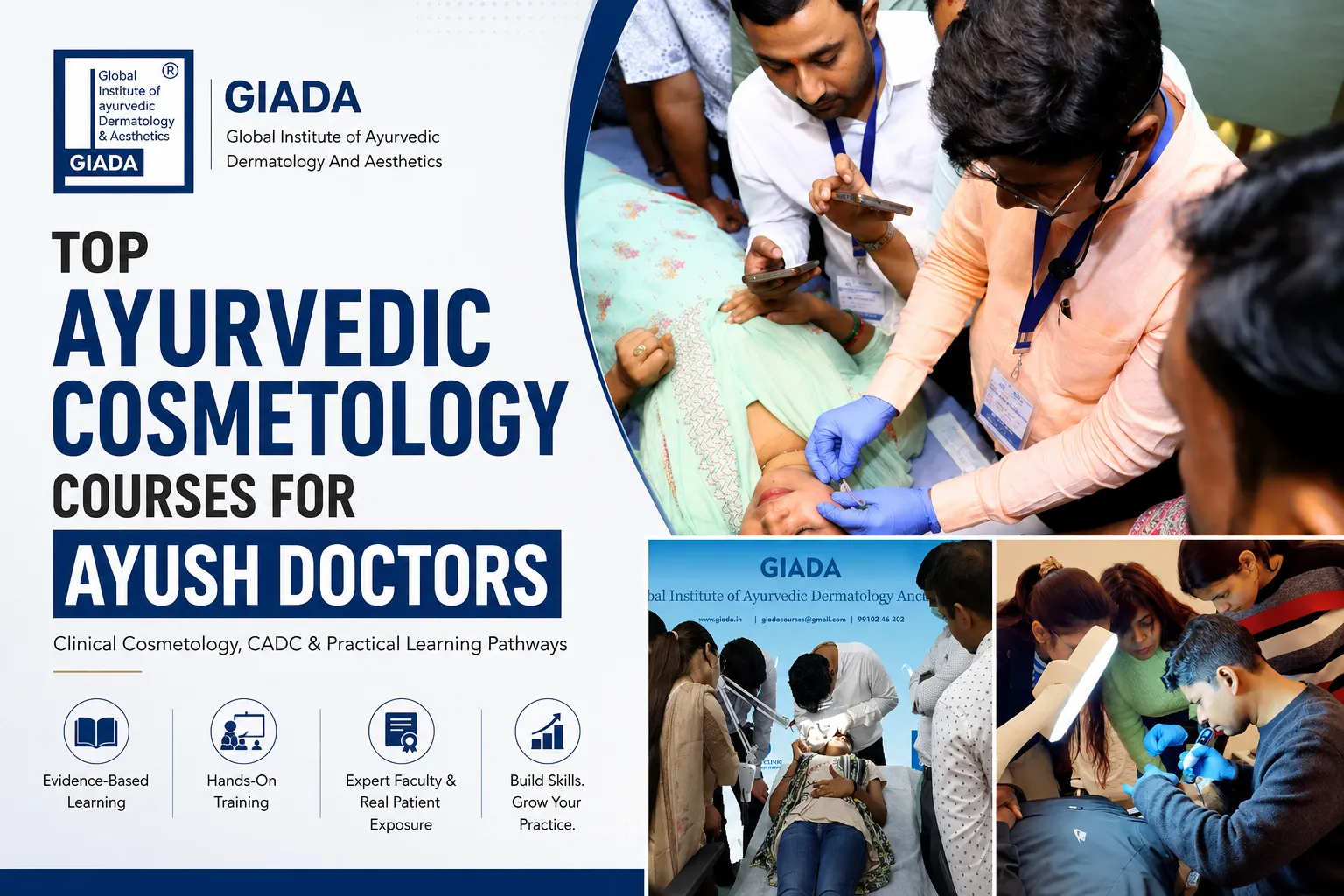
In cosmetology, the gap between understanding a procedure and performing it competently on a real patient is wider than in most areas of medicine. Reading about Fitzpatrick skin types and actually assessing a patient with type IV skin in a clinical setting are genuinely different experiences. Knowing a peel protocol and deciding, mid-procedure, how the skin is responding and whether to neutralise early — that judgment develops through supervised practice, not through notes.
This is why the practical component of any cosmetology training programme deserves careful evaluation. How many real patients are seen during training? Is supervision close and individualised, or is training largely observational in a large group? Are complications actually shown and discussed, or just mentioned in slides?
A shorter programme with genuine hands-on exposure will develop more clinical competence than a longer one that relies primarily on demonstrations and theory. When comparing courses, the structure of practical training matters more than the duration or the look of the certificate.
How to Choose the Right Cosmetology Course
Fresh BAMS or BHMS graduates with no prior cosmetology exposure: Start with a structured programme that covers assessment, procedure, and clinical safety together — the Clinical Cosmetology Course does this comprehensively within 30 days. One-day certificate courses are valuable additions once you have this foundation, not replacements for it.
Practicing doctors who already see skin and hair patients: The CADC 9-month module suits doctors who want to develop both dermatology and cosmetology expertise together. The Clinical Cosmetology Course suits those specifically focused on cosmetic procedures and aesthetic medicine.
Doctors with no time for in-person training currently: The CADC online course is a practical way to build structured knowledge while continuing to practice. Plan for in-person training as a follow-up when your schedule allows.
One question worth asking honestly before choosing any course: are you looking to understand cosmetology, or are you ready to practice it? These require different levels of training, and being clear about which stage you're at will help you choose a course that actually matches your current need.
Common Questions AYUSH Doctors Ask
Is there any prior experience required for the Clinical Cosmetology Course?
No. The course is designed for both beginners and practicing doctors. Final-year students and interns can also join to get early exposure.
Can BHMS doctors join cosmetology training?
Yes. The Clinical Cosmetology Course is open to BAMS, BHMS, BUMS, and BSMS doctors.
Are injectable procedures taught in the Clinical Cosmetology Course?
Advanced injectable procedures like Botox and fillers are included for academic awareness and patient counseling — not as procedural training. This is a clear and appropriate position given licensing requirements.
Does the course cover complications?
Yes. Complication management — chemical peel burns, post-laser reactions, allergic responses, referral protocols — is a formal module in the Clinical Cosmetology Course, not an afterthought.
Is online cosmetology learning enough?
For conceptual knowledge, yes. For procedural competence, supervised in-person clinical training is essential.
Conclusion
The path into cosmetology for AYUSH doctors is clearer now than it has been. Structured training options exist that are designed specifically for BAMS and BHMS practitioners, covering the clinical foundations, procedural skills, and practice management knowledge that a cosmetology practice actually requires.
The key is choosing a learning pathway that matches where you are and what you genuinely need to build. A fresh graduate needs a broad foundation before focusing on specific procedures. A practicing doctor may need depth in specific areas. A working professional may need a format that doesn't disrupt an existing practice.
Whatever the starting point, the principle is the same: structured learning before independent practice, supervised exposure before unsupervised procedure, and honest self-assessment about what you know and what you still need to learn. That approach — rather than the specific course name on the certificate — is what makes the actual difference in clinical outcomes.