📌 Quick Takeaway
The best Ayurvedic training centre isn't necessarily the one with the longest course. Focus on curriculum quality, practical learning, experienced faculty, and whether the programme matches your career goals.
Many BAMS, BHMS, BUMS, and BSMS doctors become interested in dermatology after starting their clinical practice. Skin conditions such as acne, fungal infections, eczema, psoriasis, pigmentation, melasma, vitiligo, hair fall, and other common concerns are frequently seen in outpatient departments. Although these topics are introduced during undergraduate education, many doctors eventually realise that they need more practical and structured learning to build confidence in managing such cases.
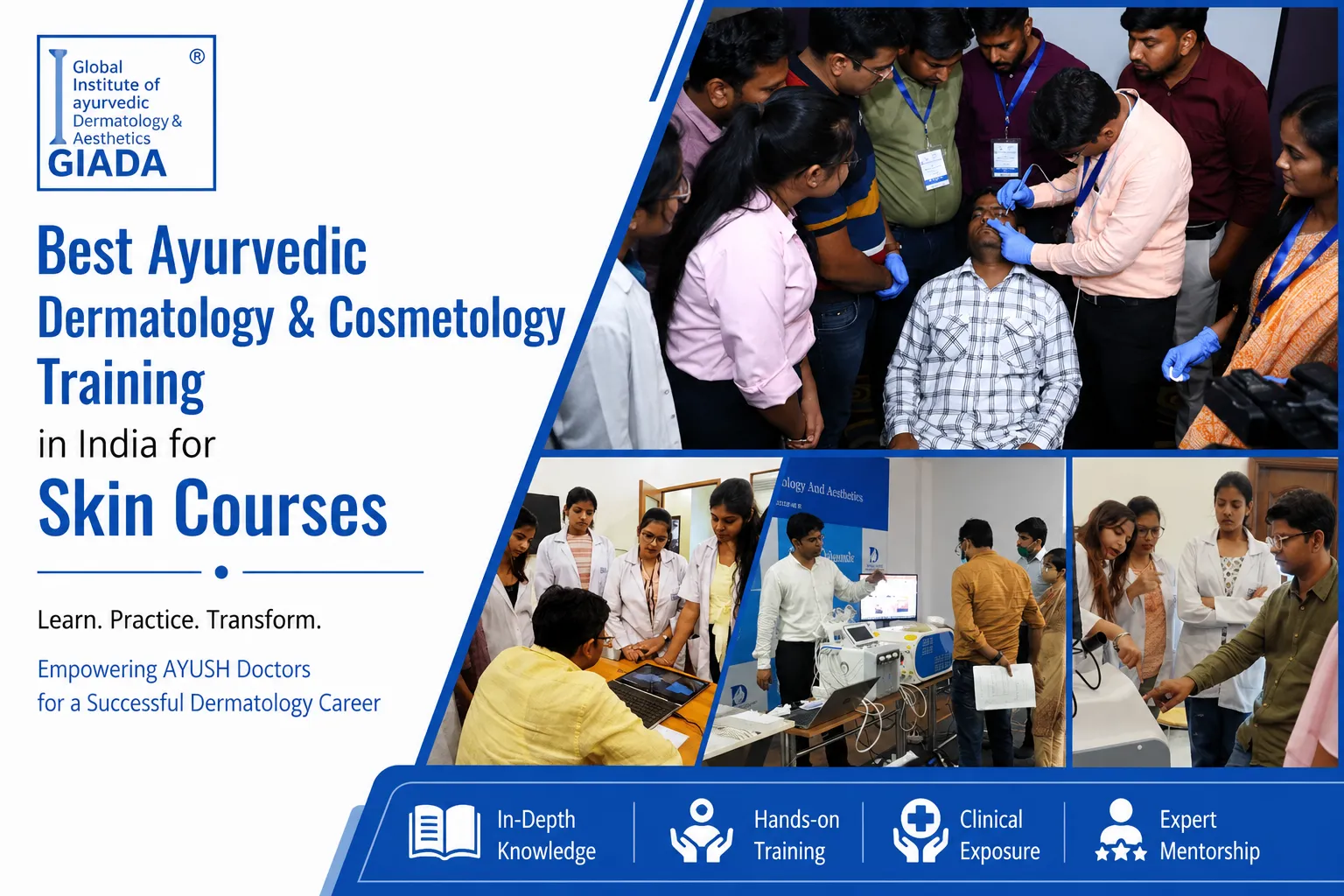
This is where the search for the best Ayurvedic training centre in India for skin courses usually begins. However, choosing the right institute is not simply about selecting the most popular name or the longest course. It is about finding a place that offers quality education, experienced faculty, practical exposure, and a structured learning approach that supports your professional growth.
If you are exploring dermatology or cosmetology training after your AYUSH degree, this guide will help you understand what to look for in a training institute, the different types of courses available, and how to choose a programme that matches your career goals. Rather than promoting a particular course, this article focuses on helping you make an informed decision based on your learning needs.
Why Do Many AYUSH Doctors Pursue Additional Skin Training?
Dermatology is one of the busiest areas of clinical practice. Every day, doctors encounter patients with a wide variety of skin and hair concerns. Some conditions are straightforward, while others require careful examination, differential diagnosis, and long-term management.
During graduation, students learn the fundamentals of dermatology. However, once they begin seeing patients independently, many realise that additional education can strengthen both their clinical understanding and practical confidence.
Structured skin courses can help doctors:
- ➜ Improve their understanding of common dermatological disorders.
- ➜ Learn a systematic approach to patient assessment.
- ➜ Understand how different skin diseases present in clinical practice.
- ➜ Develop better clinical reasoning while planning treatment.
- ➜ Gain exposure to commonly performed cosmetology procedures.
- ➜ Continue learning through organised and structured education.
The objective of continuing education is not to replace undergraduate training. Instead, it builds upon existing knowledge and helps doctors apply concepts more confidently in real clinical situations.
What Should You Look for in an Ayurvedic Training Centre?
Every institute has its own teaching style, curriculum, and learning environment. Before selecting any programme, it is worth evaluating how the institute supports learning rather than focusing only on the certificate offered at the end of the course.
A Well-Planned Curriculum
A structured curriculum allows learners to progress from basic concepts to more advanced topics in a logical sequence. Instead of learning isolated procedures, doctors first build a strong understanding of skin diseases, clinical examination, diagnosis, and treatment planning before moving towards cosmetology procedures.
This gradual learning approach often makes complex topics easier to understand and remember.
Experienced Faculty
Faculty members play an important role in any medical education programme. Learning from experienced clinicians gives doctors the opportunity to understand how theoretical knowledge is applied in everyday practice.
Good teachers also encourage discussion, answer clinical questions, and help learners understand situations that are difficult to appreciate from textbooks alone.
Practical Learning Opportunities
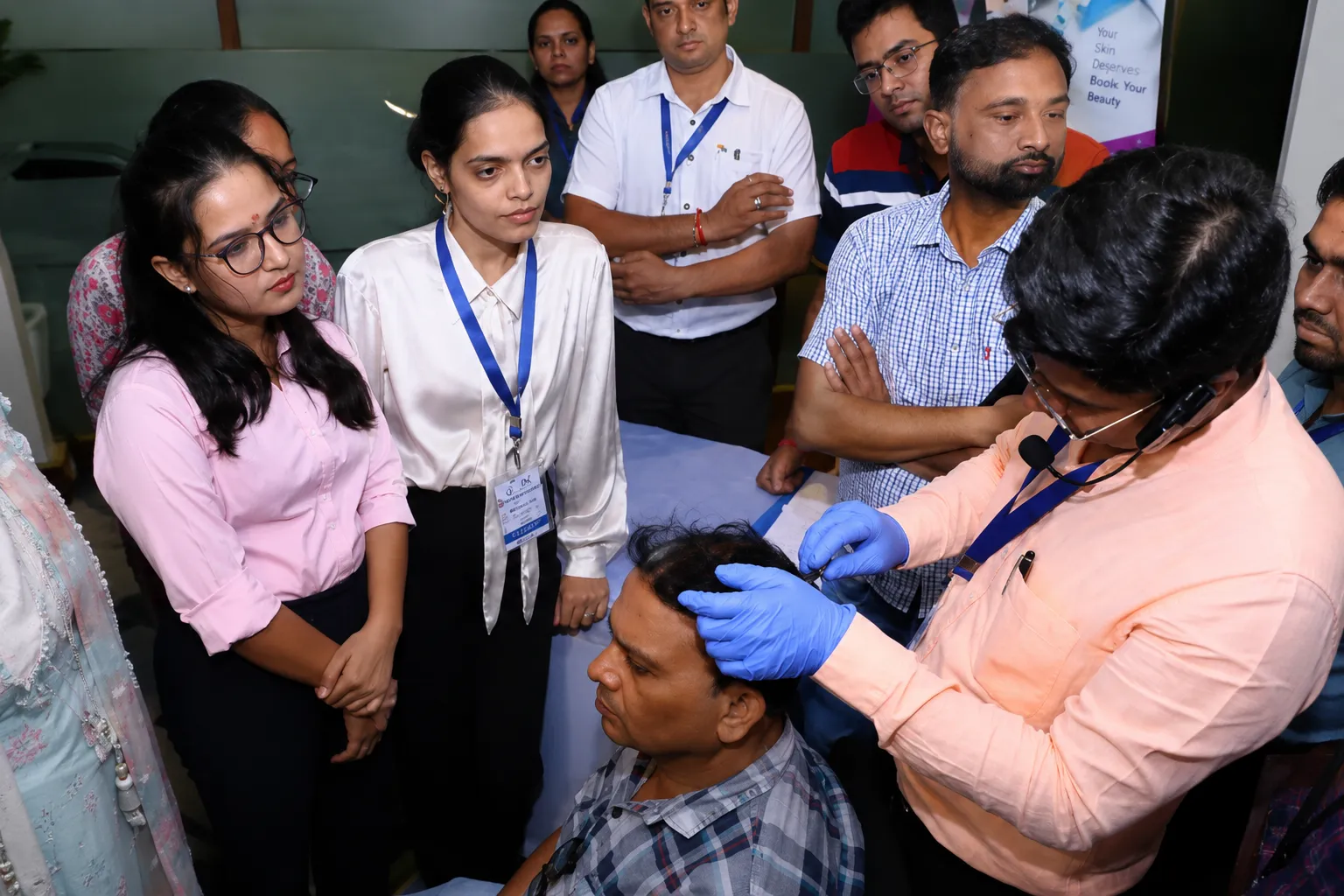
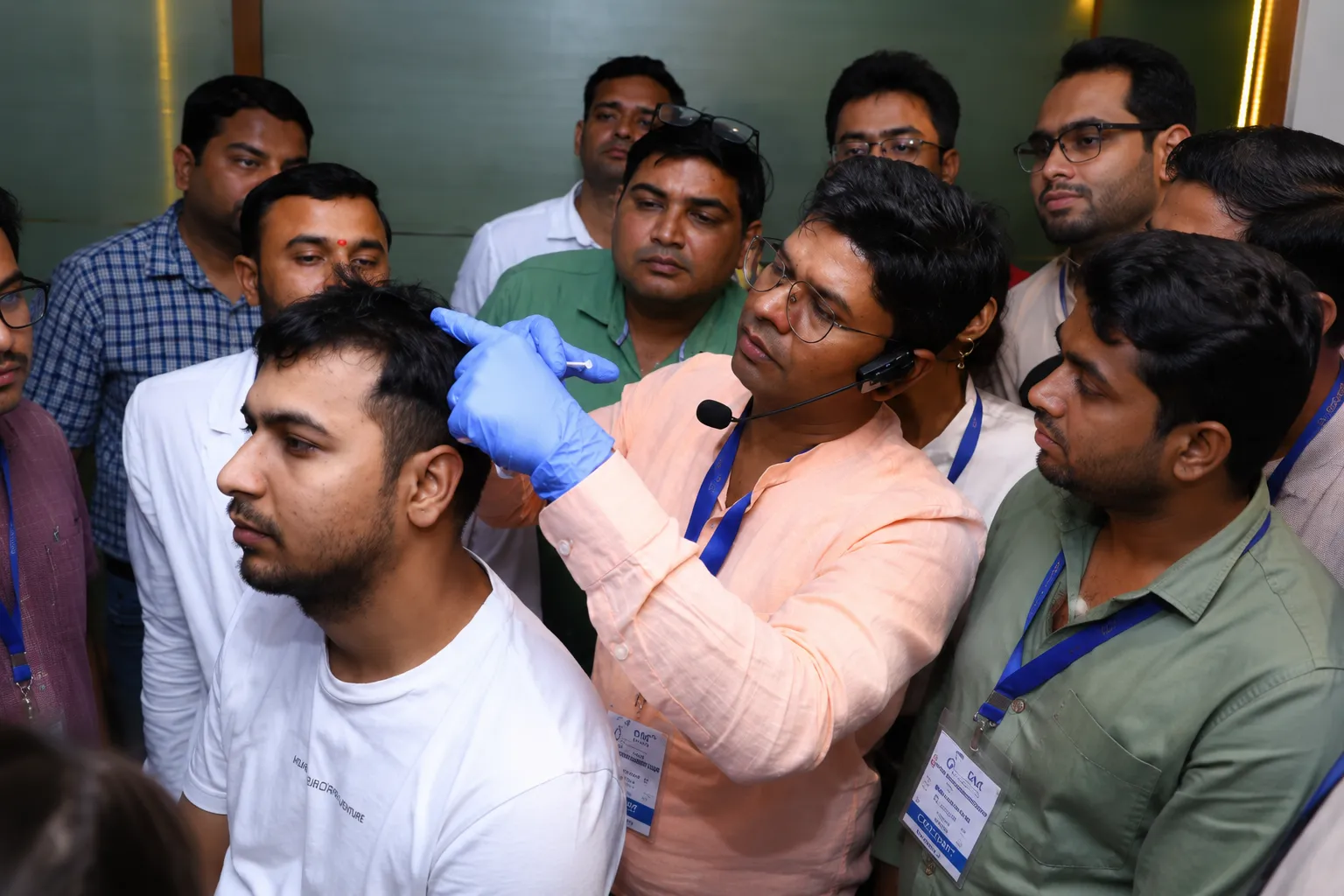
Dermatology is a visual speciality. Reading books can explain diseases, but observing real cases, understanding patient examination, and watching procedures often make learning much more meaningful.
Institutes that include supervised demonstrations or clinical exposure allow learners to connect classroom teaching with practical application.
Ethical Medical Education
A good institute should encourage ethical clinical practice and realistic expectations. Medical education should always prioritise patient safety, evidence-based learning, and responsible decision-making rather than making exaggerated claims or unrealistic promises.
Opportunities for Continued Learning
Healthcare is constantly evolving. Dermatology and cosmetology continue to introduce new techniques, technologies, and treatment approaches. Institutes that provide opportunities for ongoing education through advanced courses, workshops, or specialised programmes can help doctors continue improving their knowledge over time.
Who Can Benefit from Skin Courses?
Skin courses are designed for doctors with different educational backgrounds and career objectives. Some participants are fresh graduates looking for structured learning, while others are experienced practitioners who want to expand their clinical knowledge or learn specific procedures.
These programmes may be useful for:
- ➜ BAMS doctors interested in dermatology and cosmetology.
- ➜ BHMS doctors exploring skin-related clinical practice.
- ➜ BUMS and BSMS graduates looking to broaden their clinical skills.
- ➜ Fresh graduates seeking additional education after completing their degree.
- ➜ Practicing doctors wanting to update their dermatology knowledge.
- ➜ Clinic owners planning to expand their skin-related services.
- ➜ AYUSH practitioners interested in aesthetic medicine and cosmetology.
Every doctor's learning requirements are different. Someone beginning their career may prefer a comprehensive programme covering dermatology and cosmetology together, while an experienced practitioner may only require focused procedural training.
If you are still deciding whether dermatology is the right career path after graduation, you can also read our article on Can BAMS Doctor Become Dermatologist?. It explains common career pathways, learning opportunities, and practical considerations for AYUSH doctors interested in skin practice.
Types of Skin Courses Available for AYUSH Doctors
Not every skin course has the same objective. Some programmes provide comprehensive education covering dermatology and cosmetology together, while others focus on individual procedures or specialised areas of practice.
Understanding these differences can help you choose a course that matches your professional goals.
Comprehensive Dermatology and Cosmetology Programmes
These programmes are intended for doctors who want structured education covering a broad range of topics. Instead of focusing on one procedure, they introduce learners to dermatological disorders, patient assessment, cosmetology concepts, treatment planning, and practical demonstrations where applicable.
Doctors who are new to dermatology often prefer this type of programme because it builds knowledge step by step.
Short Certificate Courses
Short-term certificate programmes usually focus on a particular procedure or clinical area. They are often chosen by doctors who already have a foundation in dermatology and wish to strengthen specific skills.
Examples of focused certificate courses include:
- ➜ Platelet-Rich Plasma (PRP) procedures.
- ➜ Chemical peeling.
- ➜ Laser procedures.
- ➜ Wart management.
- ➜ Electric cauterization.
These programmes allow doctors to study individual procedures in greater depth without enrolling in a longer comprehensive course.
If you would like to understand how different learning pathways compare, you may also find our guide on GIADA Courses: Ayurvedic Dermatology & Cosmetology Guide helpful. It explains the purpose of different programmes, who they are suitable for, and how they support structured learning.
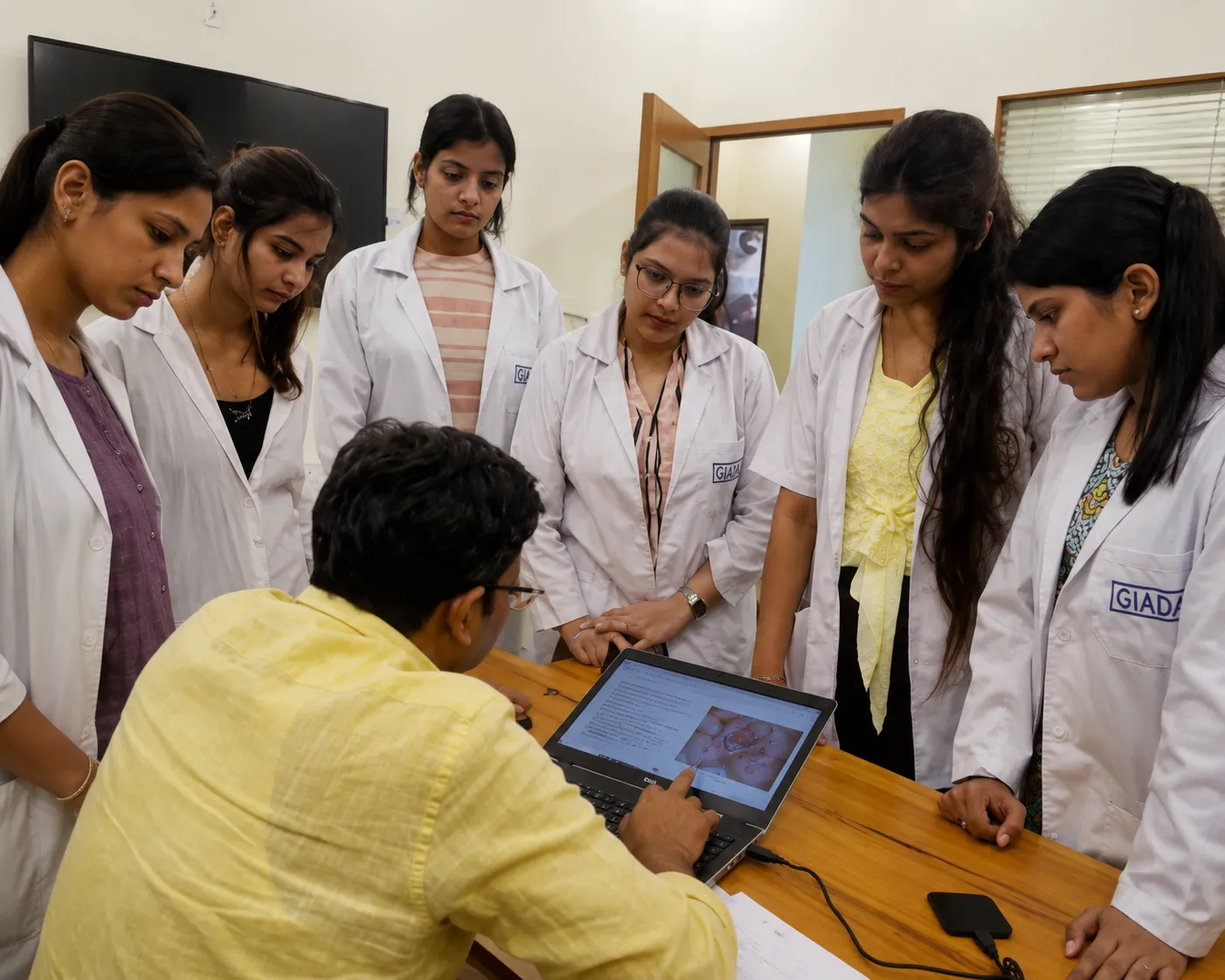
Understanding GIADA's Learning Approach
Once you understand the different types of dermatology and cosmetology courses available, the next step is choosing a training institute that matches your learning goals. A good institute should help you build knowledge gradually instead of overwhelming you with isolated topics or procedures.
GIADA (Global Institute of Ayurvedic Dermatology & Cosmetology) follows a structured educational approach designed specifically for AYUSH doctors. Rather than offering a single learning pathway, GIADA provides multiple programmes so doctors can choose according to their professional experience, career objectives, and available time.
Some doctors want to develop a strong foundation in dermatology and cosmetology through a comprehensive programme. Others may already have clinical experience and simply wish to learn specific aesthetic procedures. There are also doctors who cannot attend regular classroom sessions and prefer online learning.
Offering different learning options allows doctors to select a programme that suits their individual requirements instead of following the same path as everyone else.
Why Structured Learning Matters in Dermatology
Dermatology is a speciality that combines theory, observation, clinical judgement, and practical skills. Reading books helps doctors understand diseases, but seeing how experienced clinicians approach patient examination and treatment planning often makes learning much more meaningful.
A structured programme usually follows a logical sequence so learners can gradually develop confidence without skipping important concepts.
Most comprehensive programmes begin with fundamental concepts before progressing towards more advanced topics.
- ➜ Understanding normal skin anatomy and physiology.
- ➜ Learning to recognise common skin diseases.
- ➜ Developing clinical examination skills.
- ➜ Understanding differential diagnosis.
- ➜ Learning treatment planning principles.
- ➜ Observing clinical procedures where applicable.
- ➜ Understanding patient counselling and follow-up.
This organised learning approach often helps doctors connect theory with clinical practice more effectively than studying individual topics separately.
CADC – Certificate in Ayurvedic Dermatology & Cosmetology
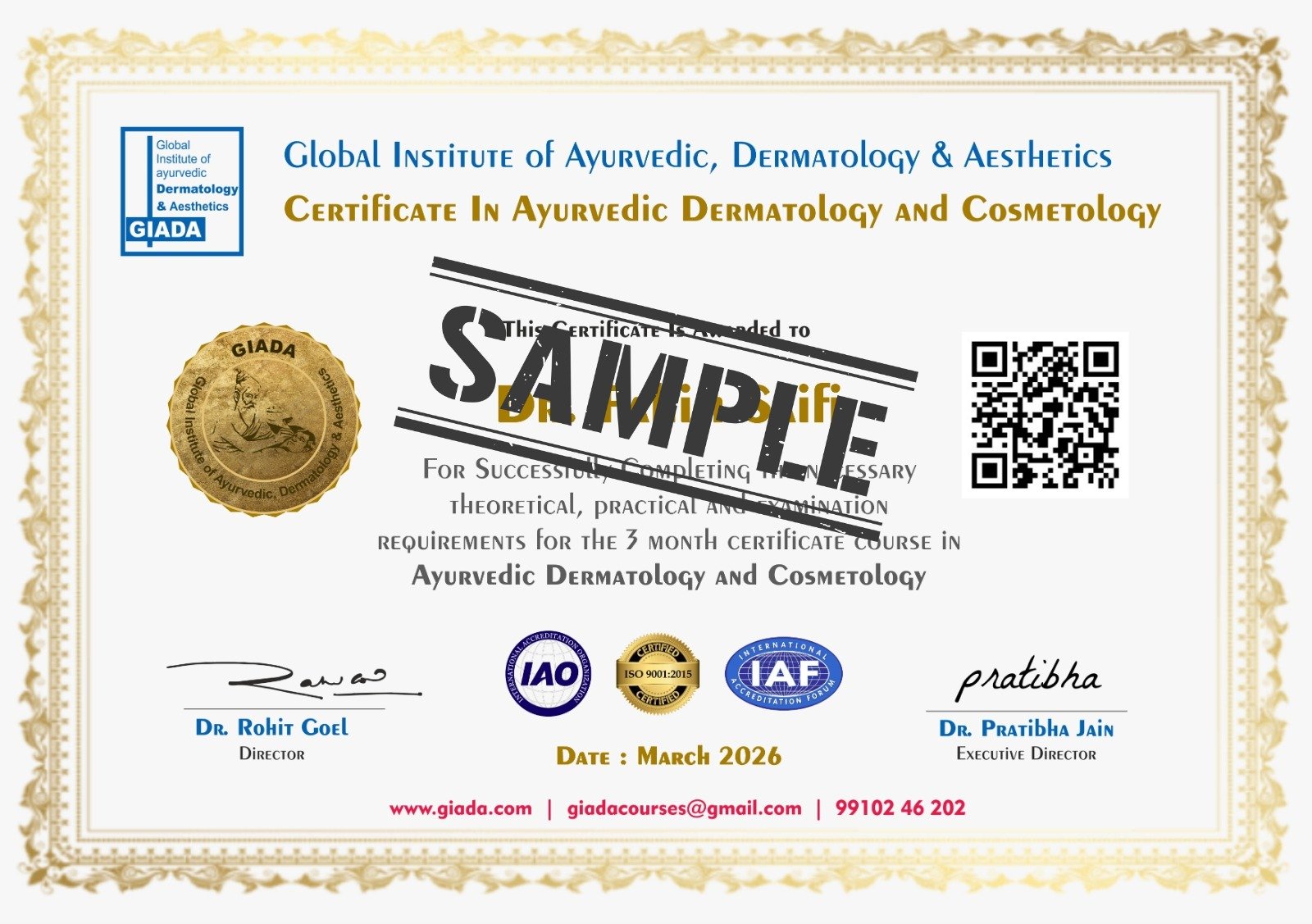
Among the different educational programmes offered by GIADA, the CADC (Certificate in Ayurvedic Dermatology & Cosmetology) is designed for doctors who want structured learning covering both dermatology and cosmetology.
Instead of focusing on only one procedure, the programme introduces participants to a wider understanding of skin diseases, patient assessment, cosmetology concepts, and clinical decision-making.
The exact curriculum may vary depending on the programme format, but doctors generally receive organised education across multiple areas relevant to dermatology practice.
Learning may include topics such as:
- ➜ Common dermatological disorders.
- ➜ Hair and scalp conditions.
- ➜ Pigmentation disorders.
- ➜ Acne and acne scar management principles.
- ➜ Clinical cosmetology concepts.
- ➜ Skin analysis and patient assessment.
- ➜ Treatment planning principles.
- ➜ Practical demonstrations where included.
Doctors looking for comprehensive education often prefer structured programmes because they provide continuity between theoretical concepts and practical learning.
CADC Learning Options
Recognising that every doctor has different educational needs, GIADA offers multiple CADC learning formats. This allows participants to choose a programme based on their availability and career plans.
CADC 3-Month Programme
This programme is generally suitable for doctors who want structured classroom learning over a shorter duration. It is often chosen by fresh graduates and practicing doctors who want organised education in dermatology and cosmetology.
This programme may be suitable for:
- ➜ Fresh BAMS, BHMS, BUMS, and BSMS graduates.
- ➜ Doctors beginning their dermatology learning journey.
- ➜ Practitioners wanting structured offline education.
- ➜ Doctors looking for balanced theoretical and practical learning.
CADC 9-Month Programme
Some doctors prefer a longer learning journey that allows additional time for observation, clinical discussions, and practical exposure. The extended programme is designed for participants who want more comprehensive learning over a longer duration.
This format may be appropriate for:
- ➜ Doctors seeking extended clinical exposure.
- ➜ Practitioners who prefer gradual learning.
- ➜ Doctors interested in strengthening clinical confidence.
- ➜ Learners wanting additional supervised learning opportunities.
CADC Online Programme
Many doctors cannot attend regular offline classes because of busy clinical schedules or travel commitments. For such learners, online education provides flexibility while allowing them to continue learning alongside their practice.
The online programme may be suitable for:
- ➜ Practicing doctors.
- ➜ Doctors living outside major cities.
- ➜ Professionals balancing work and continuing education.
- ➜ Learners who prefer self-paced theoretical study.
While online learning offers convenience, many doctors choose to combine it with practical workshops whenever possible to strengthen their understanding through observation and hands-on demonstrations.
Focused Procedural Courses
Not every doctor requires a comprehensive dermatology programme. Some practitioners already have a strong clinical foundation and simply want to understand individual procedures commonly performed in cosmetology practice.
GIADA also offers focused certificate programmes that concentrate on specific procedures.
- ➜ PRP (Platelet-Rich Plasma) Procedures.
- ➜ Chemical Peeling.
- ➜ Laser Procedures.
- ➜ Wart Management.
- ➜ Electric Cauterization.
These programmes allow doctors to build procedural knowledge gradually according to their clinical interests.
If your primary interest is aesthetic medicine and cosmetology, you may also find our article Top Ayurvedic Cosmetology Courses for AYUSH Doctors useful. It explains different cosmetology learning options and helps doctors understand which type of programme may suit their goals.
Comparison of GIADA Learning Options
🩺 Clinical Perspective
Patients rarely arrive with a confirmed diagnosis. Developing a systematic method of history taking, examination, and differential diagnosis is one of the most valuable skills any doctor can learn.
| Course | Learning Mode | Main Focus | Suitable For | Practical Exposure* |
|---|---|---|---|---|
| CADC (3-Month) | Offline | Dermatology & Cosmetology | Fresh graduates and practicing doctors | Included as per programme |
| CADC (9-Month) | Offline | Comprehensive dermatology and cosmetology learning | Doctors seeking extended clinical exposure | Extended practical exposure |
| CADC Online | Online | Theory-based dermatology education | Working professionals and remote learners | Depends on programme format |
| PRP Course | Offline | Platelet-Rich Plasma procedures | Doctors interested in hair restoration procedures | Procedure-focused |
| Chemical Peeling | Offline | Chemical peel procedures | Doctors exploring aesthetic dermatology | Procedure-focused |
| Laser Procedures | Offline | Laser-based dermatology procedures | Doctors interested in laser treatments | Demonstration-based |
| Wart Management | Offline | Common wart procedures | Doctors wanting focused procedural learning | Practical demonstrations |
*Note: Practical exposure depends on the specific programme structure. Doctors should always confirm the latest curriculum and learning format directly with the institute before enrolling.
Offline vs Online Learning – Which One Should You Choose?
Many doctors ask whether online learning is enough for dermatology education. The answer depends on your learning objectives.
If your goal is to strengthen theoretical understanding while continuing clinical practice, an online programme may be a practical choice. However, if you want to observe procedures, improve examination skills, and participate in clinical discussions, offline learning can provide additional educational value.
Many doctors ultimately benefit from combining both approaches—using online education to build concepts and offline training to gain practical exposure.
- ➜ Online learning offers flexibility for working professionals.
- ➜ Offline learning provides opportunities for observation and faculty interaction.
- ➜ Combining both formats often creates a balanced learning experience.
How to Choose the Right Skin Course for Your Career
Choosing the right skin course is not about selecting the longest programme or the one with the most modules. The best course is the one that matches your current knowledge, professional goals, and preferred way of learning.
Before making a decision, take a few minutes to evaluate what you expect from the programme. This will help you choose a learning path that genuinely supports your professional development.
Are You a Fresh Graduate?
If you have recently completed your BAMS, BHMS, BUMS, or BSMS degree, a comprehensive programme can help strengthen the foundation you built during graduation. Learning dermatology in a structured sequence often makes it easier to understand both common skin disorders and cosmetology concepts.
Are You Already in Clinical Practice?
Doctors who are already treating patients usually have different learning requirements. Instead of studying every topic again, they may prefer focused procedural courses or advanced programmes that help them expand the services they already provide.
How Much Time Can You Dedicate to Learning?
Every doctor has different responsibilities. Some can attend regular classroom sessions, while others need flexible learning because of clinical practice or personal commitments.
Think about:
- ➜ Your daily clinical schedule.
- ➜ Travel requirements.
- ➜ Family responsibilities.
- ➜ Long-term career goals.
- ➜ Whether you prefer classroom or online learning.
Selecting a course that fits your schedule makes it much easier to complete the programme successfully.
Do You Want Practical Exposure?
If your objective is to understand dermatology procedures or cosmetology techniques, practical demonstrations and supervised learning can be valuable additions to classroom teaching.
When comparing institutes, always understand what type of practical learning is included rather than assuming every programme offers the same level of clinical exposure.

Learning Experiences from AYUSH Doctors
Course brochures and curriculum outlines explain what a programme covers, but hearing directly from doctors who have completed the training often provides a better understanding of the learning experience.
When evaluating any institute, look for genuine participant experiences rather than promotional claims. Listening to previous learners can help you understand the teaching style, faculty interaction, classroom environment, and practical exposure offered during the programme.
Doctor Experience 1
Summary
This doctor shares how structured classroom teaching helped organise their understanding of common dermatological conditions. The discussion focuses on systematic learning rather than memorising isolated topics.
Doctor Experience 2
Summary
This participant explains how faculty guidance, classroom discussions, and practical demonstrations helped improve confidence while understanding dermatology and cosmetology concepts.
Doctor Experience 3
Summary
The doctor discusses how observing clinical cases and interacting with experienced faculty helped connect theoretical concepts with everyday clinical situations.
Explore GIADA Courses
Every doctor's learning journey is different. Some programmes provide comprehensive education, while others focus on individual procedures. Explore the course that best matches your professional goals.
CADC (Certificate in Ayurvedic Dermatology & Cosmetology)
Suitable for doctors looking for structured education covering both dermatology and cosmetology with organised classroom learning and practical exposure where applicable.
Explore the CADC 3 months Course →
CADC with 6 monts Clinical Intersnship (Certificate in Ayurvedic Dermatology & Cosmetology with internship)
Suitable for doctors looking for structured education covering both dermatology and cosmetology with organised classroom learning and practical exposure with a clinical Internship of 6 months.
Explore the CADC 9 months Course →
Clinical Cosmetology Course
Designed for doctors interested in understanding aesthetic medicine, cosmetology procedures, and clinical skin care practices.
Explore the Clinical Cosmetology Course →
PRP Course
Suitable for doctors who want to understand Platelet-Rich Plasma procedures and their role in hair restoration and aesthetic practice.
Chemical Peeling Course
Focuses on patient assessment, peel selection, indications, contraindications, and safe clinical application.
Explore the Chemical Peeling Course →
Laser Procedures Course
Introduces doctors to laser technology, patient selection, treatment planning, and procedural demonstrations.
Explore the Laser Procedures Course →
Wart Management Course
A focused programme for doctors interested in understanding common wart management procedures and treatment planning.
Explore the Wart Management Course →
Electric Cauterization Course
Suitable for doctors who want to learn the principles and clinical applications of electrocautery procedures.
Explore the Electric Cauterization Course →
Frequently Asked Questions
Who can join Ayurvedic skin courses?
Most programmes are intended for qualified AYUSH practitioners, including BAMS, BHMS, BUMS, and BSMS doctors. Individual eligibility may vary depending on the programme, so it is always advisable to confirm the latest admission requirements with the institute.
Is practical training important in dermatology education?
Yes. Dermatology is a clinical speciality where observation, patient assessment, and procedural understanding play an important role. Practical demonstrations and supervised learning often help doctors apply theoretical concepts more effectively.
Should I choose an online or offline programme?
It depends on your learning objectives. Online programmes provide flexibility for working professionals, while offline learning offers opportunities for classroom discussions, clinical observation, and practical demonstrations. Many doctors benefit from combining both approaches.
What is the difference between a comprehensive programme and a short certificate course?
Comprehensive programmes usually cover a broader range of dermatology and cosmetology topics over a longer duration. Certificate courses focus on individual procedures or specific clinical areas, making them suitable for doctors with targeted learning goals.
How do I choose the best Ayurvedic training centre in India for skin courses?
Look beyond the certificate. Evaluate the curriculum, faculty experience, practical learning opportunities, teaching methodology, and whether the programme aligns with your professional objectives. Choosing the right learning environment is often more important than choosing the longest course.
⭐ Final Advice
Choose a programme that helps you become a better clinician—not simply one that awards a certificate. Long-term clinical confidence comes from continuous learning and responsible practice.
Conclusion
Selecting the best Ayurvedic training centre in India for skin courses is not simply about comparing course names or programme durations. It is about finding an institute that supports meaningful learning, encourages ethical clinical practice, and helps doctors continue developing their knowledge with confidence.
Every doctor begins their learning journey from a different point. Some need a comprehensive introduction to dermatology and cosmetology, while others are looking for specialised procedural training or flexible online education. Understanding your own goals is the first step towards choosing the right programme.
As you compare different institutes, take time to review the curriculum, understand the teaching approach, ask about practical exposure, and watch genuine experiences shared by previous participants. Making an informed decision today can contribute to your professional growth and support better patient care throughout your career.