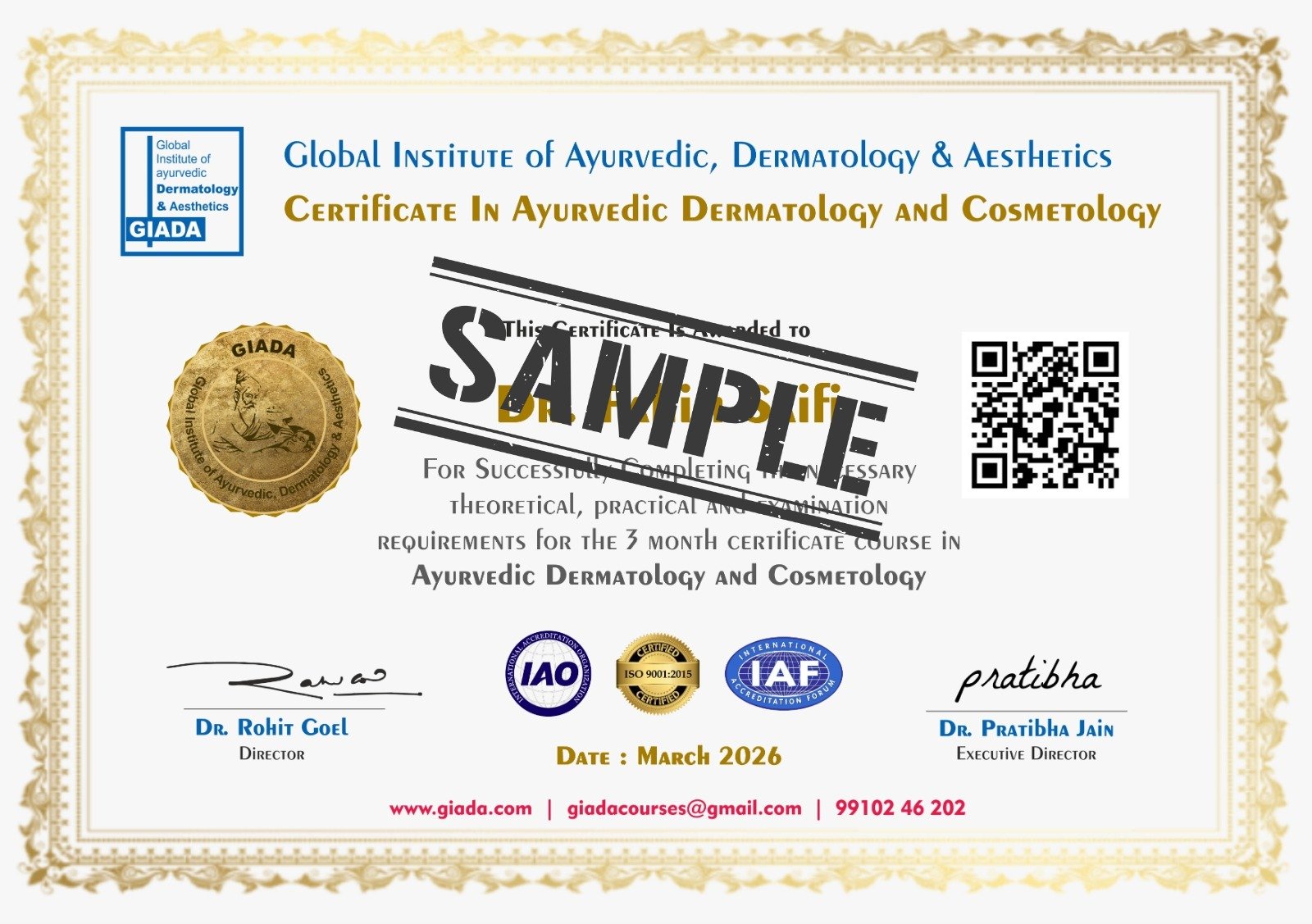
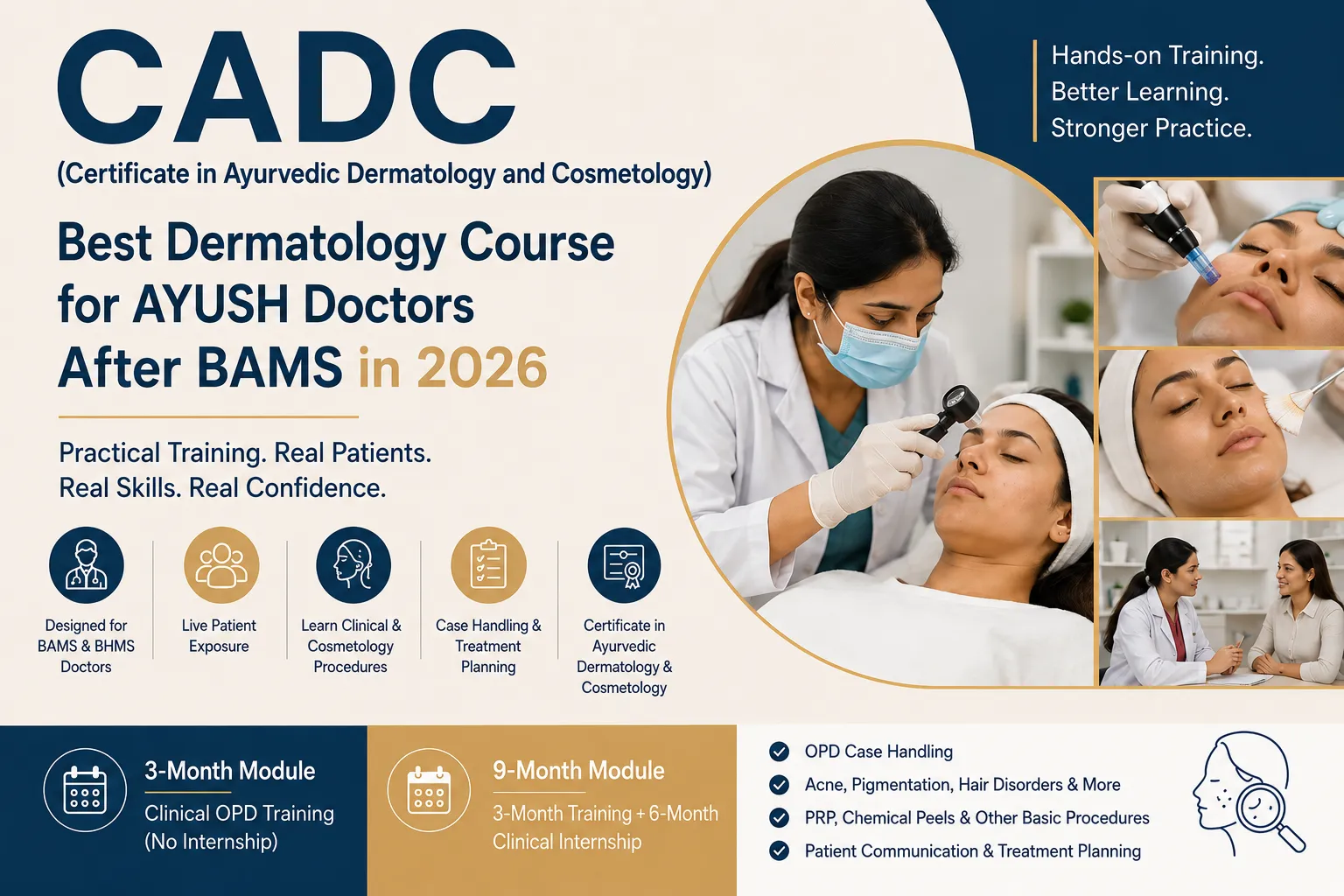
CADC (Certificate in Ayurvedic Dermatology and Cosmetology)
If you speak to BAMS doctors today, a common pattern shows up. Many want to move beyond general practice and explore dermatology. The reason is not just interest. It is also what they see daily in OPD. Skin cases are everywhere—acne, hair fall, fungal infections, pigmentation. These are not rare cases. They are routine.
For many BAMS and BHMS doctors, dermatology has become a practical and promising career option. However, the challenge is not interest—it is the lack of hands-on clinical exposure after graduation. This is why structured programs like the CADC course (Certificate in Ayurvedic Dermatology and Cosmetology) are now being considered among the more relevant dermatology courses after BAMS.
At the same time, the demand for dermatology practice continues to grow. Conditions like acne, hair fall, and pigmentation are commonly seen in OPD. Because of this, many doctors are exploring courses after BAMS that can help them build confidence in real practice.
But the real question is not “which course,” it is “what actually helps in practice.”
Why Dermatology After BAMS
Dermatology works well as a career option after BAMS for a few practical reasons.
First, patient flow is consistent. Skin and hair issues come regularly to OPD. Conditions like acne, pigmentation, dandruff, and hair fall are common.
Second, dermatology allows both medical and cosmetic work. You manage chronic conditions and also have scope for procedures.
Also, Ayurveda fits well in chronic dermatology. Many patients prefer long-term solutions, which makes ayurvedic dermatology courses relevant.
Challenges for AYUSH Doctors
Most AYUSH doctors face similar issues when entering dermatology.
- ➤ Lack of hands-on training during graduation
- ➤ Confusion between certificate and fellowship courses after BAMS
- ➤ Gap between theory and real OPD cases
- ➤ Difficulty in handling mixed or complex cases
Because of these reasons, many doctors keep switching between courses without gaining real confidence.
What Makes a Good Dermatology Course
Not every course is useful, even if it sounds good on paper.
- ➤ Live patient exposure (not just theory)
- ➤ Proper history taking and case understanding
- ➤ Learning how to observe skin conditions
- ➤ Understanding treatment decision-making
Basic procedures like PRP and chemical peels are helpful, but without diagnosis skills, they do not add much value.
Continuity is also important. Repeated exposure helps build real understanding. This is where some fellowship courses after BAMS are more useful.
About CADC Course
The CADC course (Certificate in Ayurvedic Dermatology and Cosmetology) is one of the programs designed with this practical gap in mind.
Instead of focusing only on theory, it tries to bring doctors closer to real clinical work. That is why it is often considered among relevant dermatology courses after BAMS.
The structure is simple but important.
3-Month Module
This module focuses on clinical OPD exposure.
- ➤ Understanding how OPD works
- ➤ Taking patient history
- ➤ Observing skin conditions
- ➤ Basic treatment planning
The goal is to become comfortable with real cases, not to master everything at once.
9-Month Module
This includes extended clinical exposure with internship.
- ➤ 3-month training + 6-month clinical internship
- ➤ More patient interaction
- ➤ Better understanding of case progression
- ➤ Decision-making based on response
There is also exposure to basic procedures like PRP and chemical peels, but the focus remains on understanding when to use them.
What You Actually Learn
- ➤ OPD case handling
- ➤ Acne, pigmentation, hair disorders
- ➤ Basic procedural understanding
- ➤ Patient communication
- ➤ Step-by-step treatment planning
The course does not promise instant expertise, but it helps reduce hesitation.
Comparison With Other Courses
Certificate Courses After BAMS
- ➤ Short-term and topic-specific
- ➤ Limited clinical exposure
- ➤ Good for starting but not enough alone
Fellowship Courses After BAMS
- ➤ More structured learning
- ➤ Better clinical exposure
- ➤ Requires more time commitment
Online Courses
- ➤ Flexible learning
- ➤ Strong in theory
- ➤ Limited practical exposure
The right choice depends on your stage and learning goal.
Skills You Gain
- ➤ Better clinical diagnosis
- ➤ Improved patient communication
- ➤ Gradual development of procedure skills
- ➤ Confidence based on real exposure
- ➤ Understanding clinic workflow
Career Opportunities
- ➤ Start your own dermatology practice
- ➤ Add skin services to existing clinic
- ➤ Work in a dermatology setup
- ➤ Combine with Ayurveda practice
- ➤ Explore cosmetology gradually
Growth depends more on experience and consistency than on the course itself.
Conclusion
Dermatology is a practical field. After BAMS or BHMS, theoretical knowledge alone is not enough.
You can begin with certificate courses after BAMS, but real confidence comes from clinical exposure. That is why structured fellowship courses after BAMS, including the CADC course, are more relevant.
The approach should be simple—learn slowly, observe carefully, and build experience step by step.
There is no shortcut, but with the right training and consistency, dermatology can become a stable and meaningful career path.