Introduction
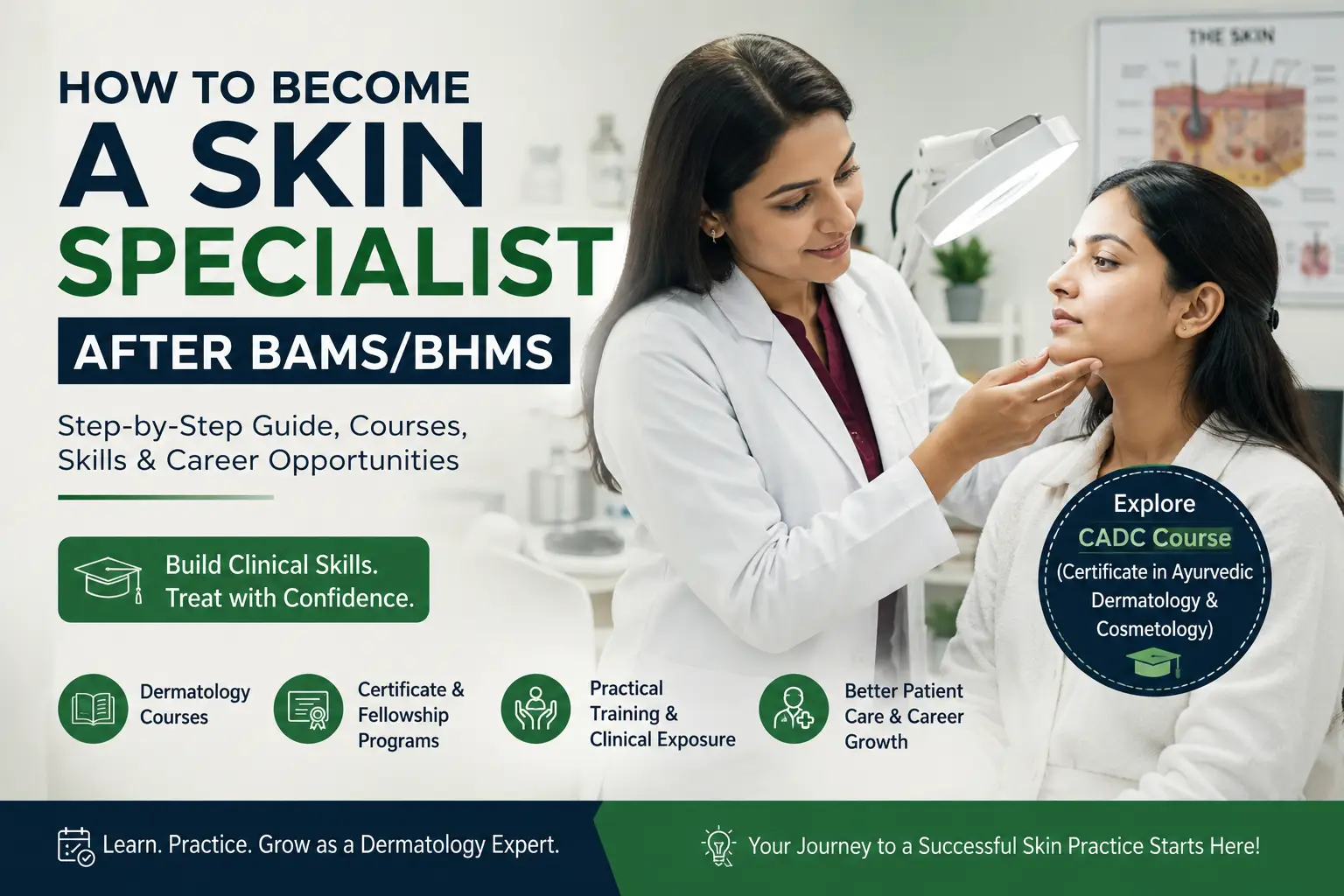
Many BAMS and BHMS doctors think about entering dermatology after graduation. The interest is natural because skin problems are very common and often require long-term care. However, most doctors face one challenge—they have theoretical knowledge but limited practical exposure.
This gap makes it difficult to confidently diagnose and treat real dermatology cases. That is why structured dermatology courses after BAMS become important, especially those that focus on real clinical exposure.
What Does a Skin Specialist Do
A skin specialist deals with conditions related to skin, hair, and nails. The role includes diagnosis, treatment planning, and patient follow-ups.
- ➤ Acne and acne scars
- ➤ Fungal infections
- ➤ Eczema and psoriasis
- ➤ Pigmentation issues
- ➤ Hair fall and scalp disorders
In addition, basic cosmetology procedures are also part of modern dermatology practice.
Why Dermatology After BAMS/BHMS Needs Practical Training
After graduation, many doctors face difficulty in handling skin cases due to lack of exposure.
- ➤ Difficulty in diagnosis
- ➤ Confusion in treatment planning
- ➤ Managing patient expectations
- ➤ Handling long-term follow-ups
Dermatology is a practical field. Without real patient exposure, it becomes difficult to build confidence.
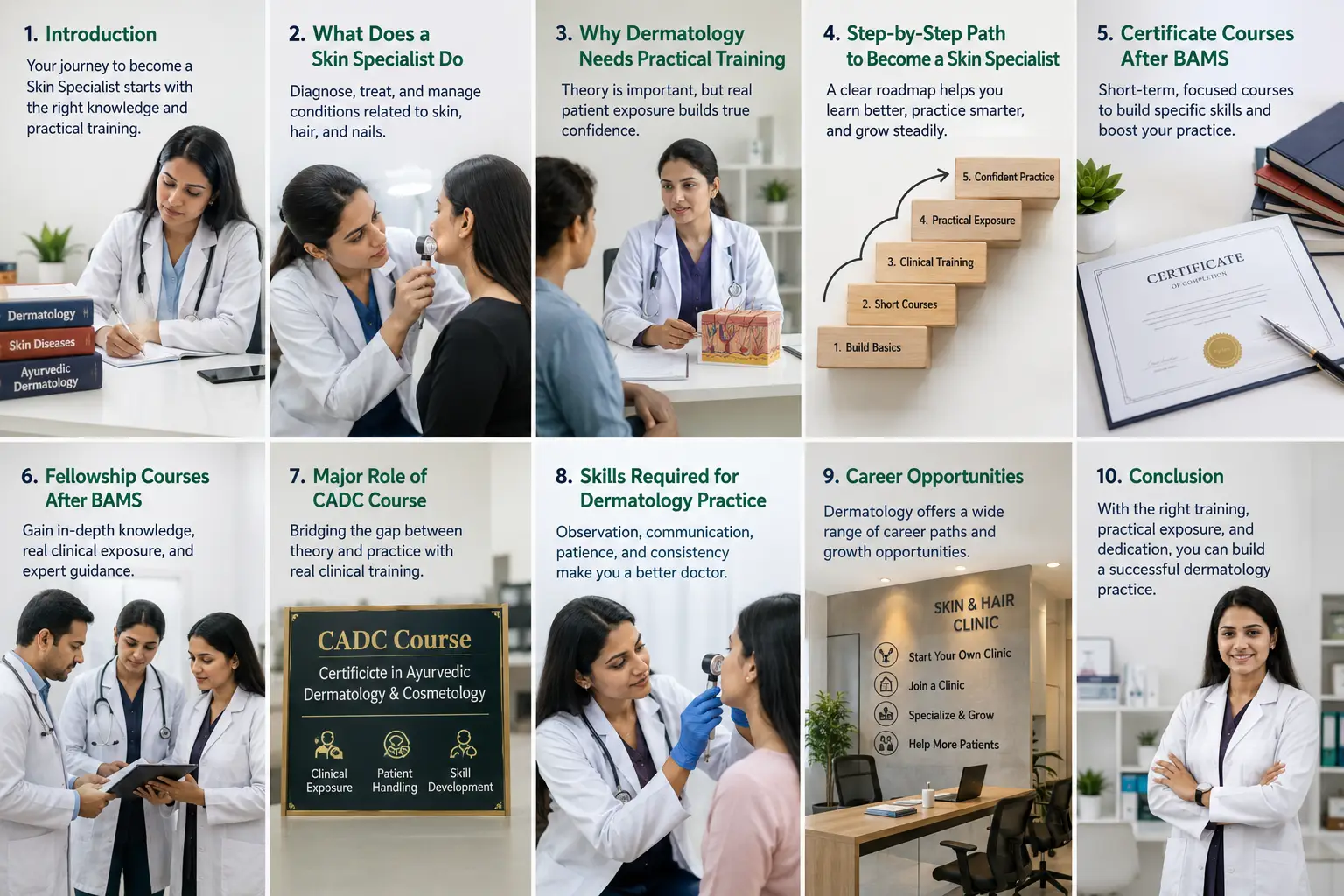
Step-by-Step Path to Become a Skin Specialist
- ➤ Understand the gap between theory and practice
- ➤ Start with basic dermatology learning
- ➤ Join certificate courses after BAMS
- ➤ Move to structured clinical training
- ➤ Practice regularly and observe cases
Certificate Courses After BAMS
Certificate courses help doctors learn specific skills in a short duration.
- ➤ Acne and acne scar management
- ➤ Chemical peeling
- ➤ PRP
- ➤ Warts management
These certificate courses after BAMS are useful for building basic understanding, but they may not provide complete clinical exposure.
Fellowship Courses After BAMS
For deeper understanding, fellowship courses after BAMS are more useful.
- ➤ Structured training
- ➤ Real patient exposure
- ➤ Case-based learning
- ➤ Understanding clinic workflow
Major Role of CADC Course in Becoming a Skin Specialist
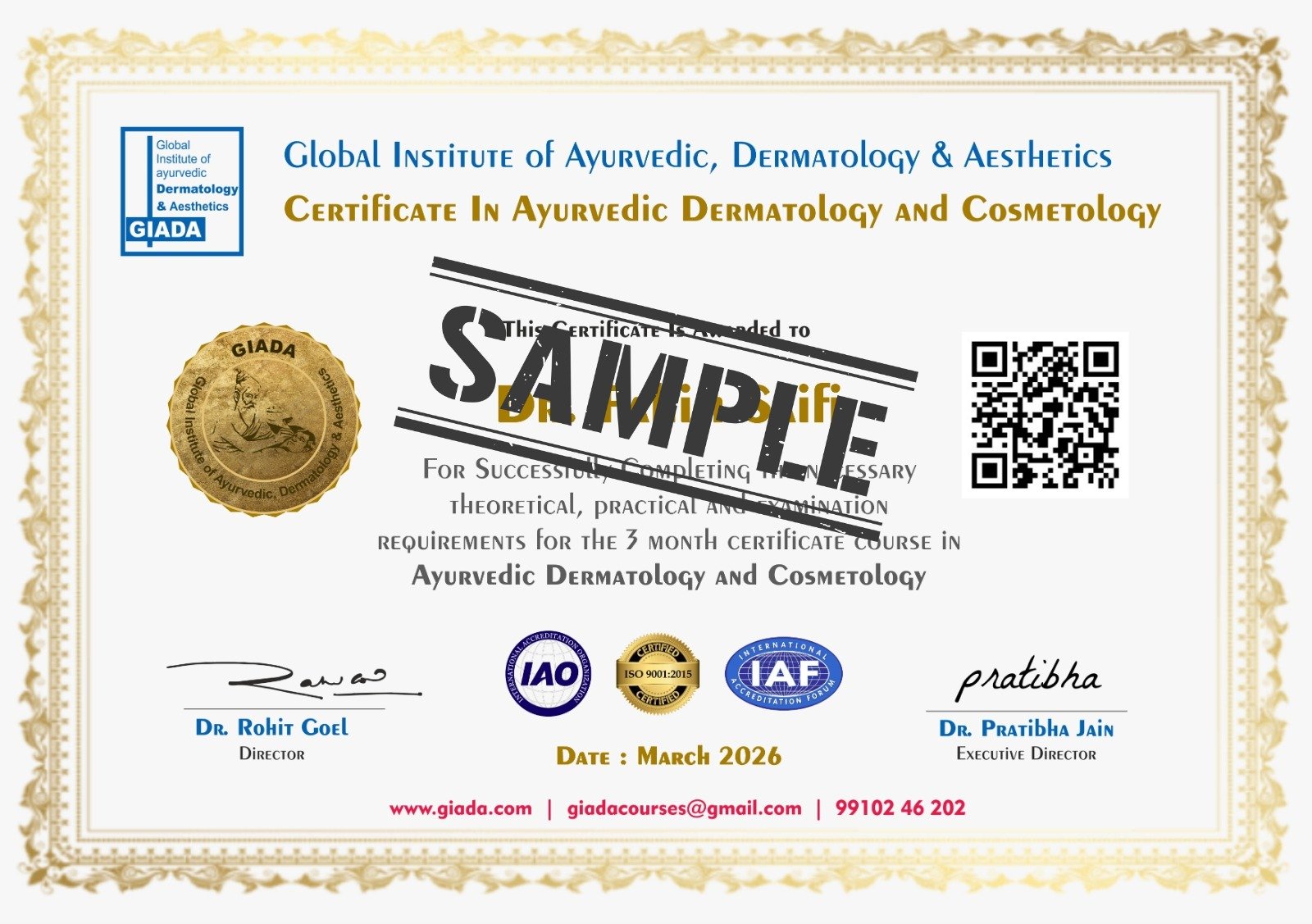
The CADC course (Certificate in Ayurvedic Dermatology and Cosmetology) plays a key role in practical dermatology training.
Why CADC is Important
- ➤ Learning through live patient cases
- ➤ Understanding patient history
- ➤ Treatment planning step by step
- ➤ Managing follow-ups
Clinical Exposure
The CADC course provides continuous exposure, which helps doctors understand real patient cases and build confidence.
Course Modules
- ➤ 3-month module – Theoritical and Practical Dermatology understanding
- ➤ 9-month module – 3 month module + 6 month Extended clinical exposure(internship)
This is why the CADC course plays a major role among ayurvedic dermatology courses.
Skills Required for Dermatology Practice
- ➤ Clinical observation skills
- ➤ Patient communication
- ➤ Basic procedure understanding
- ➤ Consistency and patience
Career Opportunities
- ➤ Start your own clinic
- ➤ Add dermatology services to practice
- ➤ Work in dermatology clinics
- ➤ Offer cosmetology treatments
Conclusion
Becoming a skin specialist after BAMS or BHMS requires more than theoretical knowledge. Practical exposure is essential. You can start with certificate courses after BAMS, but for real confidence, structured programs like fellowship courses after BAMS are important.
The CADC course helps bridge the gap between theory and practice by providing real clinical exposure. With consistent learning and practice, doctors can gradually build confidence and grow their dermatology practice.